

RismadarVoice Reporters, August 28, 2026
Iran’s Supreme Leader Mojtaba Khamenei has remained out of public view six months after the start of the war, with Iranian officials maintaining that he continues to oversee major decisions despite growing questions about his health and ability to govern.
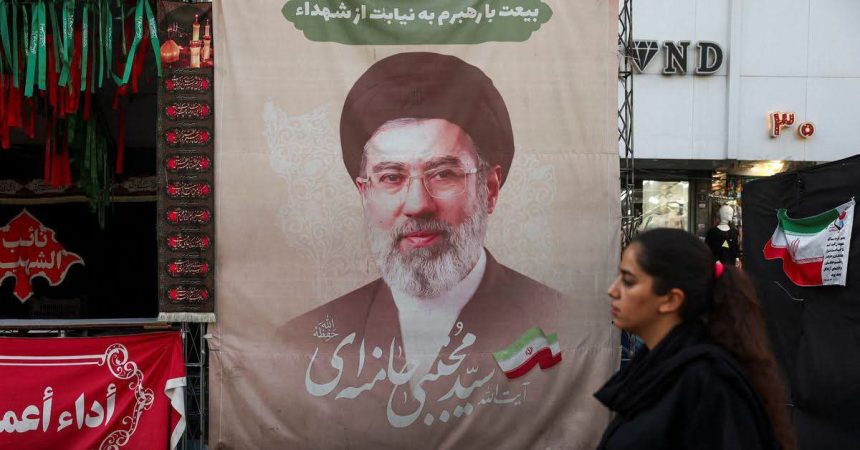
Khamenei, who was appointed supreme leader after his father was killed during the opening airstrikes of the conflict, has not appeared in a photograph, video or audio message since taking office. His communications with the public have instead been limited to written statements read by state broadcasters.
According to Iranian officials and senior sources cited by Reuters, Khamenei continues to receive major reports, hold meetings with senior officials and have the final say on important national decisions. They attributed his continued absence to security concerns and fears that information about his whereabouts could make him a target.

President Masoud Pezeshkian said on August 10 that he had held a seven-hour meeting with Khamenei.
However, the lack of any recent visual or audio appearance has generated increasing speculation among Iranians, including some supporters of the government.
A member of Iran’s Basij volunteer militia in Qom said the absence of a public appearance was affecting morale, although the person said they believed Khamenei remained involved in key decisions.
Among critics of Iran’s political system, questions have been more pronounced, with some expressing uncertainty over whether Khamenei remains alive and actively directing the government.
Iranian officials have rejected such suggestions, saying Khamenei’s health is improving and that he remains involved in decision-making.
The uncertainty comes as Iran faces major political, military and economic challenges following six months of war with the United States and Israel.
Revolutionary Guards Gain Influence
Iran’s Islamic Revolutionary Guard Corps has remained a central part of the country’s power structure during the conflict, according to senior sources.

The government has reorganised decision-making around the Supreme National Security Council, with senior Revolutionary Guards commanders working alongside political figures including Pezeshkian and parliament speaker Mohammed Baqer Qalibaf.
Sources said the arrangement has allowed Iran’s political and military institutions to maintain continuity despite the loss of senior officials and commanders during the war.
Iran’s economy, however, has come under significant pressure. The conflict and restrictions on Iranian oil exports have weakened the rial and increased concerns about renewed domestic unrest.
The government has focused on maintaining state stability, restoring deterrence and preventing the economic consequences of the war from destabilising the country.
Questions Over Leadership
Analysts say Khamenei’s prolonged absence could create difficulties for Iran’s political system because major decisions, particularly those involving the war and negotiations with Washington, traditionally require the supreme leader’s authority.
The Middle East Institute’s Alex Vatanka said the lack of a visible supreme leader could allow competing factions to interpret or claim knowledge of what Khamenei wants.

Iran has meanwhile continued to face decisions over the conflict and diplomatic efforts, including negotiations concerning the Strait of Hormuz.
Iranian officials maintain that Khamenei remains in charge, but the absence of direct public communication has continued to fuel questions about his health, role and influence six months into the war.