RismadarVoice Reporters, August 11, 2026
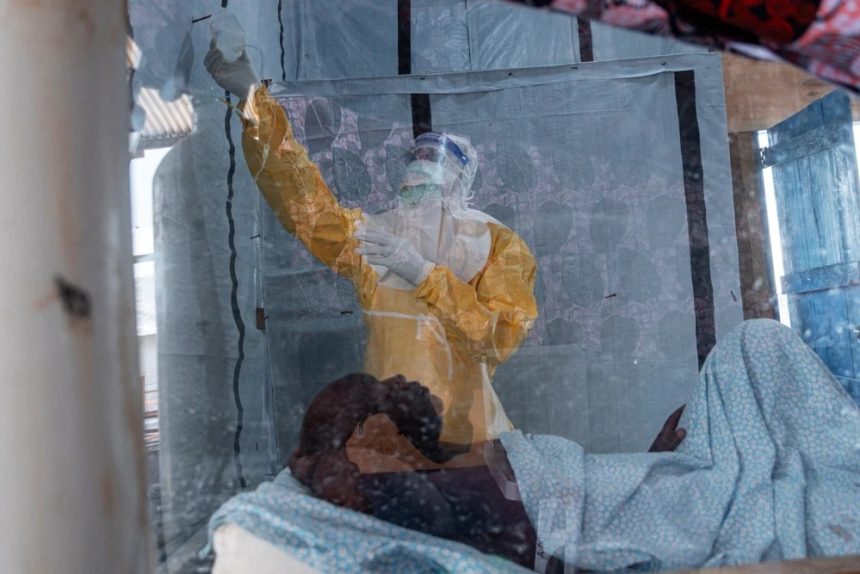
More than 2,000 people have died in the Democratic Republic of Congo’s Ebola outbreak, which health authorities say is the fastest-growing outbreak on record.
Government data released Tuesday showed that the outbreak has recorded 4,381 confirmed cases, including 2,011 deaths, while 704 patients remain in admission and isolation.
The outbreak was officially declared on May 15, but the death toll has increased rapidly. It took about nine weeks to reach 1,000 deaths, while another 1,000 deaths were recorded in roughly three weeks.

The outbreak is now the second-largest Ebola outbreak in history, behind the 2014–2016 West Africa epidemic, which recorded more than 28,000 cases and over 11,000 deaths.
Health workers and aid organisations are facing major challenges in containing the disease across the five affected provinces. Rebel conflict, poor roads and payment disputes have disrupted response efforts, while several healthcare workers have reportedly gone on strike.
The outbreak is also proving difficult to track, with most new infections occurring outside the contacts already being monitored.
The current outbreak is caused by the rare Bundibugyo virus, for which there are no approved vaccines or treatments. Clinical trials for potential vaccines and treatments have begun in Ituri province, the epicentre of the outbreak.
The World Health Organisation said the outbreak likely began in February, months before it was detected in one of Congo’s most remote areas. Some early cases were reportedly misdiagnosed as malaria or typhoid, while initial testing focused on another type of Ebola.

WHO Regional Director for Africa, Dr Mohamed Yakub Janabi, said the response was struggling to keep pace with the virus.
The current outbreak is Congo’s 17th Ebola outbreak and the largest the country has experienced since the virus was first identified near the Ebola River in 1976.