RismadarVoice Reporters, June 29, 2026
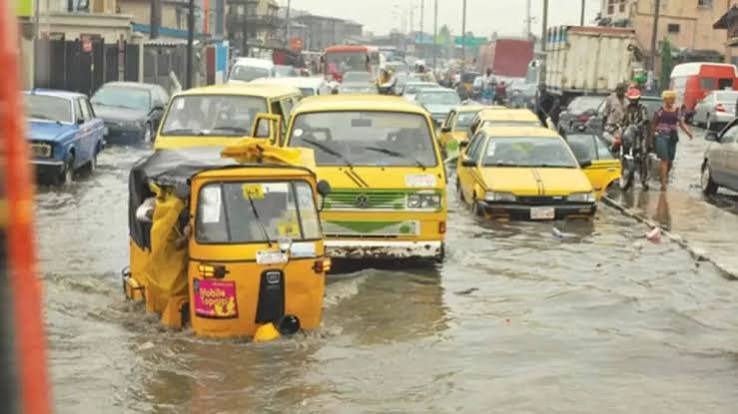
Heavy rainfall disrupted commercial and vehicular activities across Lagos on Sunday as flash floods submerged major roads, stranded motorists and commuters, and triggered prolonged traffic congestion in several parts of the state.
The downpour, which began around noon and lasted until about 4 p.m., left many highways and inner roads underwater. Numerous vehicles became trapped in flooded sections, while others broke down, worsening gridlock across the metropolis.
A survey of affected areas showed that key routes, including the Lagos-Ibadan Expressway, Ikorodu Road, Lagos-Abeokuta Expressway, Apapa-Oshodi Expressway, Oshodi, Agege, Ikeja, Alimosho, Obalende and the Lekki-Epe Expressway, were severely affected by flooding, disrupting the movement of people and goods.

Many motorists were forced to temporarily abandon their vehicles, while commercial bus operators struggled to navigate waterlogged roads. In several locations, commuters resorted to trekking long distances after transport operators suspended services due to rising floodwaters.
The flooding occurred days after the Nigerian Meteorological Agency (NiMet) warned of widespread rainfall and possible flash floods across parts of the country, urging residents in vulnerable areas to remain alert and take precautionary measures.
Residents blamed the flooding on blocked drainage systems, indiscriminate waste disposal and inadequate maintenance of drainage infrastructure.
One motorist, Johnson Alaba, who was caught in the flood along the Apapa-Oshodi Expressway, described the experience as frustrating.
“The blocked drainage channels made the situation worse. The road is completely submerged and movement has become impossible because the drainage system is not functioning,” he said.
Another driver, identified simply as Tony, recounted his ordeal after navigating floodwaters between Isolo and Mile 2.

“I practically drove through deep floodwaters with my car. The heaps of refuse dumped along the expressway worsened the flooding. The government should address indiscriminate waste disposal along major roads. If nothing is done, the situation could lead to serious public health challenges,” he said.
Residents of flood-prone communities also expressed concern over the recurring disruption caused by heavy rainfall, calling on the state government to intensify drainage maintenance and enforce environmental sanitation regulations.
Reacting to the situation, the Lagos State Commissioner for the Environment and Water Resources, Tokunbo Wahab, urged residents not to panic, describing the flooding experienced in many parts of the state as temporary.
According to him, flash flooding is common in coastal cities during periods of intense rainfall and should not be mistaken for prolonged flooding.
He said the state government had continued to strengthen flood control measures through year-round drainage maintenance and improved waste management systems.
“Our flood control strategy is designed to ensure that drainage channels remain functional throughout the year. We are also sustaining an efficient solid waste management system to minimise the impact of heavy rainfall,” Wahab said.
The commissioner added that the government was collaborating with relevant agencies to reduce the impact of flooding across the state.
He explained that flooding is only considered severe when water remains on roads for several hours, urging the media to help educate the public and avoid unnecessary panic.
Wahab attributed the temporary flooding to high lagoon water levels, explaining that high tides often prevent stormwater from flowing freely into the lagoon.
“When the lagoon experiences high tidal movement, drainage outlets become temporarily blocked, preventing stormwater from being discharged. Once the tide recedes, the accumulated water flows out and the roads become passable again,” he said.
He also urged residents to avoid practices that contribute to flooding, including illegal land reclamation, building on drainage setbacks, and indiscriminate dumping of refuse or construction materials into drainage channels.
According to the commissioner, sustained investment in resilient drainage infrastructure and strict enforcement of environmental regulations have significantly reduced the severity of flooding in Lagos despite increasingly heavy rainfall.
“Resilience and consistent enforcement have played a major role in improving Lagos’ drainage system,” Wahab said.