RismadarVoice Reporters, June 7, 2026
With formal job opportunities becoming increasingly scarce, a growing number of young Kenyan graduates are turning to agriculture powered by artificial intelligence and digital tools to build sustainable livelihoods.
In rural western Kenya, many university-educated youths who once aspired to white-collar employment are now combining traditional farming practices with mobile applications, social media platforms and data-driven tools to boost productivity and income.
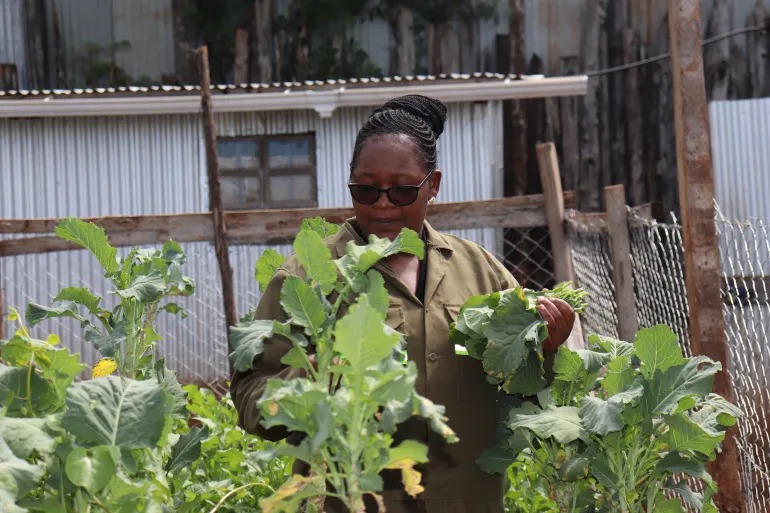
One such farmer is a 33-year-old Chepkorir Rotich from Kiboito village in Kericho County. Her day begins before sunrise, tending to livestock, selling milk, and harvesting vegetables for customers who place orders online, including through Facebook.

Rotich, a college graduate who left school more than a decade ago in search of formal employment, said she struggled to secure stable work despite multiple contract roles that paid modest wages. Like many young Kenyans, she eventually turned to farming as a more reliable source of income.
Today, she uses social media not only to market her produce but also to share agricultural knowledge with a growing online audience, which she says includes tens of thousands of followers across different platforms. She also runs a YouTube channel focused on modern farming practices.
Experts say her experience reflects a broader shift in Africa’s agricultural sector, where young people are increasingly embracing farming as a technology-driven enterprise rather than a subsistence activity.
According to agricultural researchers, the average African farmer is still relatively older, a trend that has discouraged many youths from entering the sector. However, practitioners like Rotich argue that access to land and modern tools is more important than age in determining success in agriculture.
Another young farmer, Geoffrey Kiprop from nearby Kaptoroi village, represents this emerging generation of tech-enabled agricultural entrepreneurs. Despite holding a degree in information technology, Kiprop has been unable to secure formal employment and instead earns his income through a combination of contract tech work and farming.
He now generates most of his earnings from agriculture, managing livestock and crops such as tea, coffee, maize, cabbage and beans. Kiprop says his IT background gives him an advantage in using digital tools to optimise production and improve efficiency.
He relies on AI-powered applications such as Plantix, which diagnoses crop diseases through image recognition and provides weather updates and farming recommendations. He also uses tools like Virtual Agronomist, which analyses farm data using GPS coordinates to generate soil nutrient recommendations and farm management insights.
For livestock management, Kiprop uses digital platforms such as Digicow to track milk production, feed usage and animal health records, helping him monitor profitability and improve decision-making.

Agricultural experts say such innovations are part of a wider transformation in farming, where artificial intelligence, data analytics and mobile technology are reshaping rural economies and creating new opportunities for young people.
Despite the promise of technology, farmers acknowledge that agriculture remains demanding and requires consistency, patience and long-term commitment to succeed.
As Rotich puts it, success in farming depends on persistence and learning from mistakes, adding that many young people abandon agricultural ventures too early before they become profitable.
With unemployment remaining high, more Kenyan graduates are expected to explore similar paths, blending education, innovation and technology to redefine what modern farming looks like in the country.