RismadarVoice Reporters
June 3, 2026
At least one person was killed and 63 others injured after Iranian missile and drone attacks struck Kuwait on Wednesday, escalating tensions in the Persian Gulf and putting a fragile ceasefire between Iran and the United States under renewed pressure.
According to Kuwaiti authorities, the attacks caused significant damage to Terminal 1 of Kuwait International Airport, forcing a temporary suspension of air traffic. The country’s military said it intercepted several incoming missiles and drones, though some projectiles were still destroyed on the ground.
The latest violence comes amid continued military exchanges between Washington and Tehran, threatening ongoing diplomatic efforts aimed at easing tensions and restoring stability in the region.

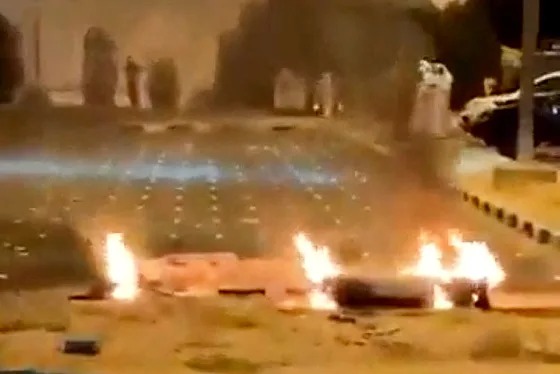
Kuwaiti officials confirmed that one person died in the attacks while dozens of others sustained injuries. Videos circulating online showed fires, heavy smoke, and extensive damage at the airport facility as emergency responders rushed to the scene.
Military authorities reported intercepting 13 missiles and 17 drones launched towards Kuwaiti territory. In response, Kuwait expelled two Iranian diplomats, condemning the attack as a violation of its sovereignty and civilian infrastructure.
The Kuwaiti Foreign Ministry stated that the country reserves the right to take all necessary measures to protect its territorial integrity and national security.
The United States Central Command (CENTCOM) disclosed that Iran launched several ballistic missiles toward Gulf states, including Kuwait and Bahrain.
According to CENTCOM, U.S. and allied air defence systems intercepted multiple threats, while American forces also shot down drones near the Strait of Hormuz.
The U.S. military further confirmed carrying out what it described as self-defence strikes on an Iranian military control facility on Qeshm Island, accusing Tehran of threatening regional security and maritime navigation.
Iran’s Foreign Ministry condemned the American strikes, describing them as violations of the ceasefire framework currently under negotiation.
Tehran also criticised U.S. actions in the Strait of Hormuz, where American forces reportedly disabled a tanker suspected of heading toward Iran’s main oil export terminal at Kharg Island.
The Strait of Hormuz remains a critical global energy corridor, with approximately 20 per cent of the world’s oil supply passing through the waterway. Continued instability has already pushed global oil prices higher, with Brent crude rising to around $98 per barrel.
Despite the renewed violence, U.S. President Donald Trump maintained that negotiations with Iran remain active.
Speaking in a recorded interview, Trump acknowledged having a tense conversation with Israeli Prime Minister Benjamin Netanyahu regarding ongoing military operations in Lebanon. While expressing optimism about reaching a deal with Iran, Trump warned that failure to secure an agreement could lead to harsher alternatives.

“We’ll have to decide either we sign a deal or we do it the other way,” Trump said, adding that the alternative “is not nice.”
The crisis has been further complicated by Israel’s continued military operations in Lebanon against Iran-backed Hezbollah forces, despite previous calls for de-escalation.
Several Arab nations, including Saudi Arabia, Qatar, the United Arab Emirates, Bahrain, Jordan, Egypt, Oman, and Lebanon, condemned the Iranian attacks across the Gulf region.
With missile exchanges continuing, energy markets under pressure, and diplomatic negotiations facing uncertainty, concerns are growing that the latest escalation could further destabilise the Middle East and undermine efforts to secure a lasting peace agreement between Washington and Tehran.