



RismadarVoice Reporters
June 2, 2026
More than a year after being evacuated from Gaza for urgent medical care, a group of Palestinian patients and their companions remain stranded in Baghdad, caught in a worsening administrative and humanitarian limbo that has left them unable to return home or continue onward travel.
The evacuees, part of a group of 46 Palestinians flown to Iraq in May 2024 for treatment, say they were initially promised short-term medical stays. Instead, many have spent over two years confined inside Baghdad’s Medical City complex, with their identification documents reportedly confiscated by Iraqi authorities.
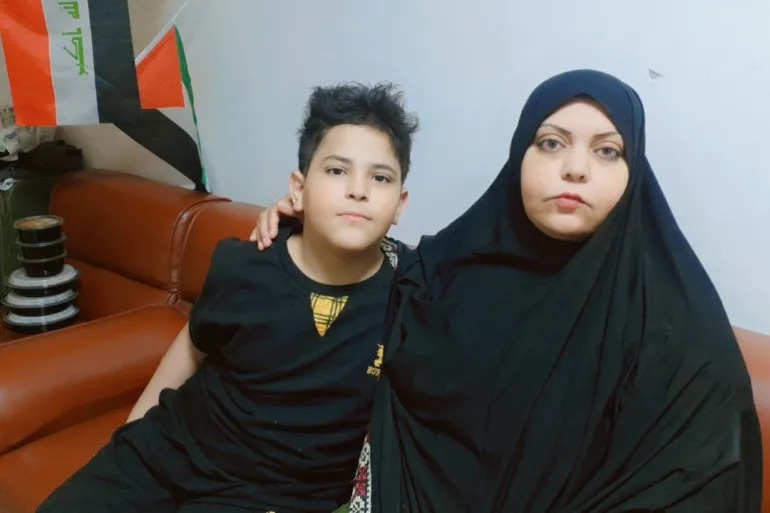
Among them is 40-year-old Hanin Muhammad, who travelled as a medical escort for her sister, a kidney transplant patient. She says she has not seen her six children since leaving Gaza.
“My six children are in Gaza, and I am entering my third year without seeing them,” she said, describing repeated attempts to recover their travel documents as unsuccessful.

According to testimonies from patients, the confiscated documents have effectively frozen their mobility. While the Palestinian Embassy in Baghdad has issued replacement passports in some cases, evacuees say the documents lack official Iraqi validation, leaving them unusable for international travel.
The group includes patients with severe conditions such as cancer, blood disorders, cardiac illness, kidney disease, and war-related injuries. Health authorities estimate that many require ongoing specialist treatment that is now complicated by their confinement and uncertainty.
The evacuees say their situation shifted from emergency medical relief to indefinite confinement soon after arrival. Their identification documents were allegedly taken upon entry, with explanations that they were being held by Iraqi security and foreign affairs authorities.
“When we asked for them, they told us they were held by Iraqi Intelligence and the Ministry of Foreign Affairs,” Muhammad said. “We demand them back, but no one answers us.”
Without valid documentation, movement outside the hospital complex has been heavily restricted. Several evacuees say they have remained inside the facility for months at a time, dependent on hospital provisions and local charity for survival.
Some also report worsening health and psychological distress due to prolonged separation from families in Gaza, many of whom remain in displacement camps amid ongoing conflict.
For many of the stranded patients, the crisis has extended far beyond medical care. Several describe deep emotional trauma, including loss of family members, destroyed homes, and children growing up in displacement without contact.
One oncology patient, Samah Abdul Moati, said she has lost multiple sons in the war and now no longer prioritises treatment over returning home.
“The hardest feeling is that I am trapped between the hospital walls while my heart is outside with my family,” she said.
Health officials in Gaza estimate that tens of thousands of patients are still waiting for permission to seek treatment abroad, highlighting the scale of the broader medical evacuation crisis linked to restricted crossings and ongoing conflict.
Iraqi health officials have largely distanced themselves from the case. A health ministry spokesperson described the matter as “political,” while other officials said they were not authorised to comment.
Meanwhile, evacuees say they remain stuck in a cycle of administrative delays, unclear jurisdiction, and lack of formal coordination between Iraqi and Palestinian authorities.

Despite repeated appeals, there is still no clear timeline for resolution either for continued treatment abroad or for safe return to Gaza.
For those trapped in Baghdad’s Medical City, the uncertainty has become its own form of captivity. One evacuee summed up the situation simply: they are no longer just patients in need of care, but people suspended between systems that no longer respond.
“I am asking for a simple human right,” one patient said. “That my family does not remain divided between life and death.”