RismadarVoice Reporters, May 30, 2026
The Federal Government of Nigeria has intensified efforts to expand the use of Compressed Natural Gas (CNG) across Nigeria’s transport sector, with President Bola Tinubu commissioning new gas infrastructure aimed at boosting access to cleaner and more affordable energy alternatives.
The commissioning ceremony, held in Abuja on Friday, featured the unveiling of the Rolling Energy High-Capacity Daughter Booster Station in Jahi, alongside similar facilities developed by Ibile Oil and Gas and Portland Energy in Lagos, as well as Femadec in Owerri.

The projects are part of a broader national strategy to deepen gas utilisation and support the government’s target of converting about one million vehicles from petrol and diesel to alternative fuel sources.
Despite ongoing interventions, official figures indicate that only about 100,000 vehicles have so far been converted to CNG, with stakeholders citing challenges around infrastructure availability and consistent gas supply.
Representing the President, Minister of State for Petroleum Resources (Gas), Ekperikpe Ekpo, said the new facilities demonstrate increased private sector involvement in Nigeria’s gas expansion agenda.
He explained that the investments, supported by the Midstream and Downstream Gas Infrastructure Fund, align with the administration’s Decade of Gas initiative, which seeks to reposition natural gas as a key driver of industrial growth, energy security, and transportation reform.
According to him, Nigeria’s vast gas reserves remain a strategic asset that must be harnessed for domestic development rather than export dependency alone.
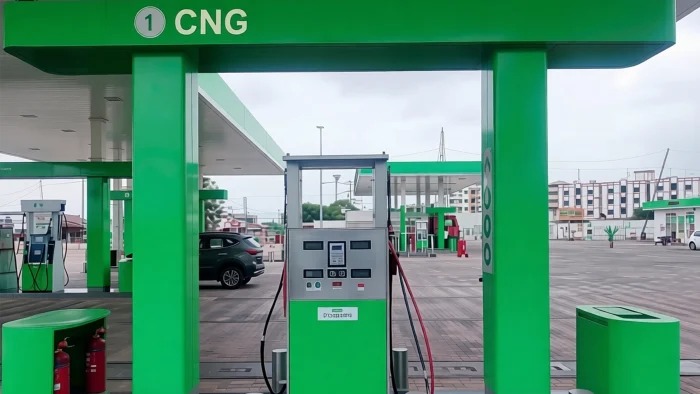
The newly commissioned Jahi facility, developed by Rolling Energy in partnership with the MDGIF, is expected to serve as a major distribution hub within the Federal Capital Territory, with significant capacity for vehicle refuelling operations.
Officials say the station can supply up to 1,000 standard cubic metres of gas per hour and is equipped with storage systems capable of holding 17,000 standard cubic metres.
The Nigerian Midstream and Downstream Petroleum Regulatory Authority reaffirmed its commitment to supporting the growth of the sector, stating that regulatory frameworks are being strengthened to encourage further investment in gas infrastructure.
Private sector operators also expressed optimism about the expanding adoption of CNG, noting that rising fuel prices and economic pressures are accelerating public interest in alternative energy options.

According to Rolling Energy Limited, the newly launched facility has already begun serving hundreds of vehicles daily since partial operations commenced, signalling growing acceptance of gas-powered transportation across the country.
The Federal Government says the ongoing rollout of CNG infrastructure forms part of a long-term plan to reduce transport costs, improve energy sustainability, and diversify Nigeria’s energy mix.