

RismadarVoice Reporters, May 18, 2026
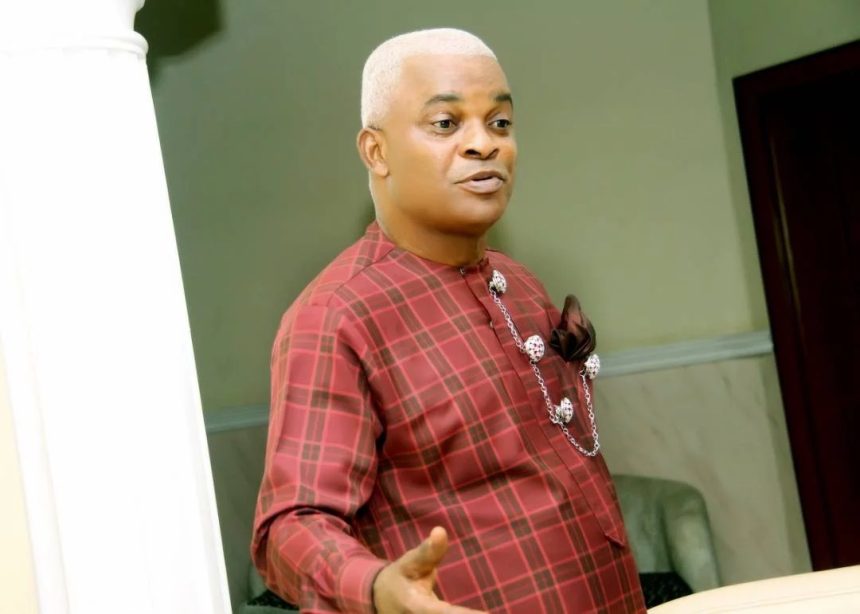
The Special Adviser on Media and Publicity to Senate President Godswill Akpabio, Rt. Hon. Eseme Eyiboh, has defended the recent amendment to the Senate Standing Rules, stating that the move is intended to strengthen the National Assembly as an institution rather than serve personal or political interests.
Eyiboh said discussions surrounding the amendment had focused too heavily on individuals instead of the broader objective of promoting institutional growth and legislative stability.
According to him, the revised provision requiring senators seeking key presiding and principal positions to possess a minimum level of legislative experience is designed to ensure continuity and improve the effectiveness of parliamentary leadership.

“The office of Senate President is one of the most sensitive and technically demanding constitutional offices in Nigeria. Experience matters,” he stated.
The former House of Representatives spokesperson argued that legislative institutions globally periodically review and update their rules to reflect evolving governance realities and improve efficiency.
He noted that failing to reform procedures and operational standards could weaken institutional development over time.
Eyiboh dismissed claims that the amendment was introduced to limit political competition or protect specific individuals, insisting that public attention should be directed toward whether the changes support the long-term interests of the Senate.
He also rejected arguments suggesting that the new requirements could affect the legitimacy of Senate President Godswill Akpabio’s emergence, explaining that the amended rules cannot apply retrospectively.
“Laws are generally prospective, not retroactive,” Eyiboh said, stressing that Akpabio emerged under the regulations that existed at the time and could not be subjected to standards introduced afterwards.
He warned that retroactive application of laws could create uncertainty within democratic institutions and undermine governance processes.
Eyiboh further maintained that while democratic systems encourage openness and inclusiveness, leadership roles within critical legislative institutions demand a high level of procedural understanding, institutional memory and parliamentary experience.
He added that lawmakers, including Senator Adams Oshiomhole and others who have expressed differing opinions on the amendment, are entitled to their views, but urged that discussions remain centred on institutional development rather than political interests.

“Institutions outlive individuals. Senate Presidents will come and go, but the rules and traditions established today may shape legislative stability for decades,” he said.