RismadarVoice Reporters, May 7, 2026
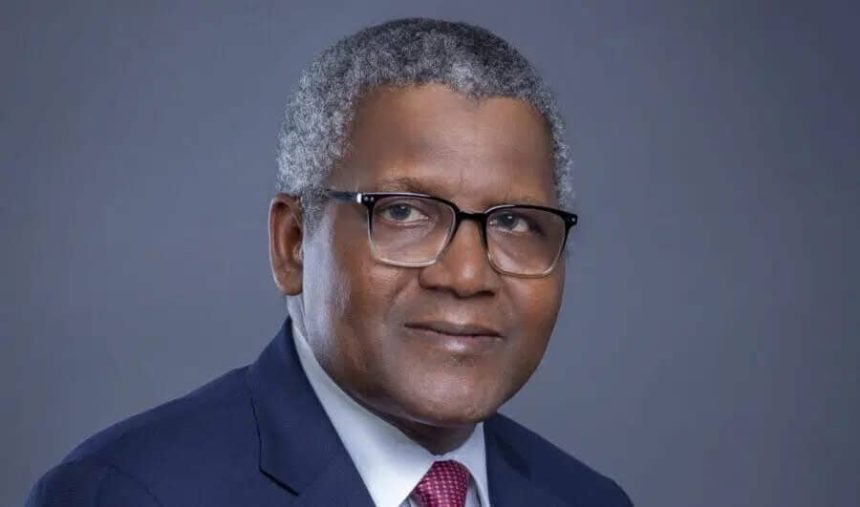
Africa’s richest businessman, Aliko Dangote, has announced plans to expand into 20,000 megawatts of power generation as part of a broader strategy to accelerate industrialisation across Africa.
Dangote disclosed the ambitious energy plan during a podcast hosted by the Managing Director of the International Finance Corporation, Makhtar Diop, where he defended his over $20bn refinery investment and called for stronger African-led investments in infrastructure and manufacturing.
Speaking on the rationale behind the refinery project, Dangote said Nigeria’s heavy dependence on imported petroleum products, despite being one of Africa’s leading crude oil producers, motivated him to embark on the venture.
“At one point, we were exporting 2.4 million barrels per day and not processing even one barrel. Every single product we used gasoline, jet fuel, everything was imported. I said no, this cannot continue,” he said.
The businessman revealed that the refinery has now attained operational stability, processing crude oil at near full capacity after years of scepticism surrounding the project.

“Today, we have tested the refinery up to 661,000 barrels per day, and for the last two months, we have been stable at 650,000 barrels per day. Every single department is working,” Dangote stated.
He described the refinery as evidence that African firms can successfully execute large-scale industrial projects, despite doubts from critics and international observers.
“People always said this refinery will never happen. But today, we have shown that as an African company, we can deliver. That gives us a voice to tell others, come and invest in Africa,” he added.
Dangote explained that the refinery, regarded as one of the largest single-train facilities globally, was delivered through a self-driven engineering, procurement and construction model.
“We established our own EPC system. Every single nut and bolt we bought, we shipped, and we assembled. At the time I started, I had never even seen crude oil in my life. But we took the risk,” he said.
Beyond refining, the industrialist disclosed that the Dangote Group is intensifying investments in key infrastructure projects, including power generation, liquefied natural gas and maritime logistics.
“We are now going into power, 20,000 megawatts. We are building the biggest deep-sea port, and we are doing LNG. Why? Because we are looking at the needs of Africa and making them a reality,” he said.
According to him, reliable electricity remains critical to unlocking Africa’s manufacturing and industrial potential. He added that the group’s investments in fertiliser and agriculture are also aimed at boosting economic transformation across the continent.
Dangote noted that the company is targeting 12 million tonnes of urea production annually, a move that could position it among the world’s largest fertiliser producers.
“For me, what gives satisfaction is how to take our continent out of trouble. We cannot continue importing what we consume. We must produce, we must add value,” he said.
On intra-African trade, Dangote criticised visa restrictions, border bottlenecks and high transportation costs, describing them as major barriers to economic integration.
“Today, I need about 38 visas to move around Africa. How do you invest like that? You cannot even move goods from Lagos to Benin without spending weeks at the border. There is no way trade can work like this,” he stated.
He further lamented the high cost of logistics on the continent.
“It costs more to ship goods from Lagos to Accra than from Spain to Lagos. Flights within Africa are also too expensive. These are the things holding us back,” he added.
Dangote said his African Renaissance initiative was established to unite investors and policymakers committed to removing structural barriers to growth and driving reforms across Africa.
He stressed that Africa’s transformation must be driven by private-sector investments, insisting that foreign investors would only commit when Africans demonstrate confidence in their own economies.
“If I don’t invest my own money, I cannot go anywhere and convince others to invest. But now we have demonstrated that these things are possible,” he said.

The billionaire entrepreneur also revealed plans to list parts of his business empire, including the refinery, to allow Africans to participate in ownership and wealth creation.
“We want Africans to invest. When we list, we will make sure dividends are paid in dollars. This will inject billions of dollars into the hands of Africans and change lives,” he said.