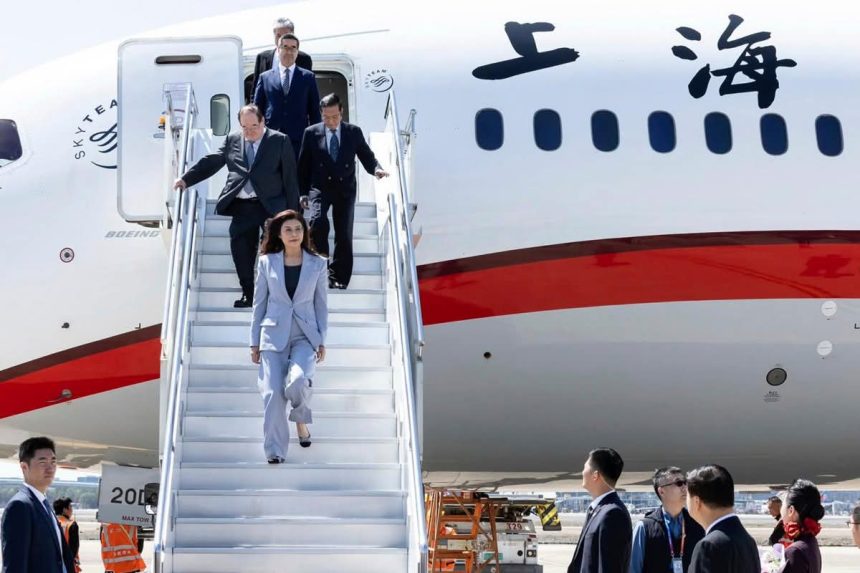
Micah Jonah, April 8, 2026
Taiwan’s main opposition leader has called for renewed dialogue with China during a rare visit to the mainland, signalling a push for improved relations at a time of heightened tensions across the Taiwan Strait.
Cheng Li-wun, chairwoman of the Kuomintang party, made the remarks during her visit to Nanjing, where she paid tribute at the мавзoleum of Sun Yat-sen, a historic figure revered on both sides of the strait. The visit marks the first time in a decade that a leader of the party has travelled to China.

Speaking during the event, Cheng emphasized the importance of unity, inclusiveness, and cooperation, noting that both sides share historical and cultural ties that could serve as a foundation for peace and development. She stressed the need for practical engagement to reduce tensions and promote stability in the region.
Her visit comes amid ongoing political and military strain between Taipei and Beijing. China continues to assert its claim over Taiwan, while refusing formal engagement with Taiwan’s current administration, which it considers pro-independence. This has contributed to a prolonged period of limited communication and increasing uncertainty.
Cheng is expected to seek a meeting with Chinese President Xi Jinping, a move that could carry significant diplomatic weight if realized. The outcome of such an engagement may influence political debate within Taiwan, particularly over the balance between defence preparedness and diplomatic outreach.
The trip has drawn criticism from Taiwan’s ruling Democratic Progressive Party, which argues that the visit could weaken national security interests. Officials from the party have maintained that strengthening defence capabilities remain essential in the face of growing pressure from Beijing.

Despite the political divide, the visit highlights ongoing debate within Taiwan over how best to manage relations with China. While some favour a firm stance backed by defence measures, others continue to advocate for dialogue as a means of reducing risk and ensuring long-term stability in the region.