Micah Jonah
March 16, 2026
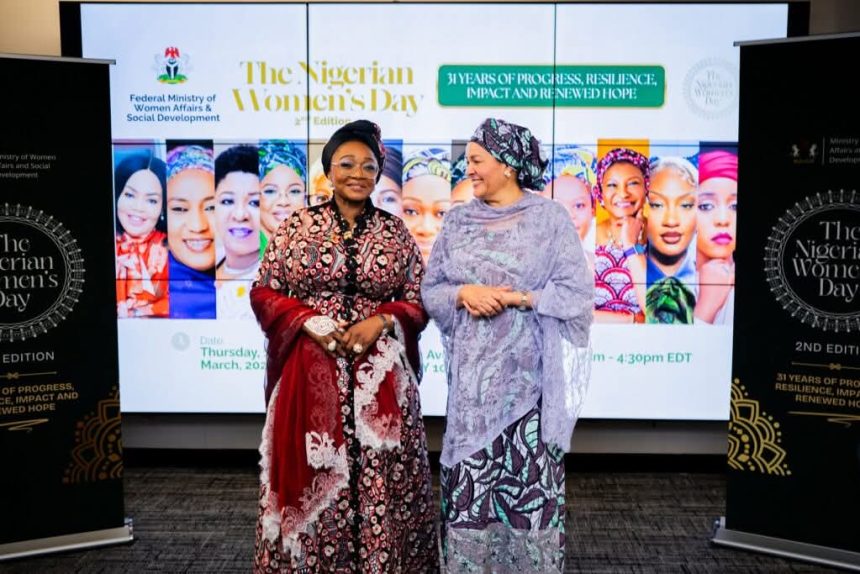
The Federal Ministry of Women Affairs and Social Development convened the second edition of Nigerian Women’s Day during the 70th session of the United Nations Commission on the Status of Women (UNCSW70) in New York City.
Led by the Minister of Women Affairs and Social Development, Hajiya Imaan Sulaiman-Ibrahim, the event brought together global leaders, policymakers, and stakeholders to advance gender equality and inclusive development. Key participants included UN Deputy Secretary-General Amina J. Mohammed, ministers, diplomats, civil society leaders, entrepreneurs, artists, and members of the Nigerian diaspora.
Themed “ 31 Years of Progress, Resilience, Impact and Renewed Hope, ” the programme highlighted Nigeria’s ongoing efforts to promote women’s empowerment and reinforce the administration of President Bola Ahmed Tinubu on women’s rights, family resilience, and inclusive development.
Minister Sulaiman-Ibrahim outlined Nigeria’s Renewed Hope Social Impact Interventions 774 framework, aimed at reaching women across all 774 local government areas. The programme focuses on energy access, agriculture, digital inclusion, health and protection, creativity and innovation, leadership, education, child development, and family resilience.
She issued a six-point call to action urging governments, development partners, and civil society to strengthen collaboration, increase funding, and ensure practical implementation of initiatives. “Women’s empowerment is not a social programme; it is an economic strategy, a security strategy, and a development imperative,” she said.
Highlights of the event included a fireside conversation between Sulaiman-Ibrahim and UN Deputy Secretary-General Mohammed, linking Nigeria’s ambitions with the global gender equality agenda. Panel discussions explored global leadership, peace and security, women in governance and economy, and positive masculinity.
Cultural presentations, including a live body-painting demonstration by internationally acclaimed artist and human rights activist Laolu Senbanjo, added vibrancy to the programme, blending policy engagement with cultural celebration.
The organizers emphasized that the strength of any nation depends on stable families, with women, children, and households central to economic policy, social investment, and national development planning. the programme highlighted Nigeria’s ongoing efforts to promote women’s empowerment and reinforce the administration of President Bola Ahmed Tinubu on women’s rights, family resilience, and inclusive development.
Minister Sulaiman-Ibrahim outlined Nigeria’s Renewed Hope Social Impact Interventions 774 framework, aimed at reaching women across all 774 local government areas. The programme focuses on energy access, agriculture, digital inclusion, health and protection, creativity and innovation, leadership, education, child development, and family resilience.
She issued a six-point call to action urging governments, development partners, and civil society to strengthen collaboration, increase funding, and ensure practical implementation of initiatives. “Women’s empowerment is not a social programme; it is an economic strategy, a security strategy, and a development imperative,” she said.
Highlights of the event included a fireside conversation between Sulaiman-Ibrahim and UN Deputy Secretary-General Mohammed, linking Nigeria’s ambitions with the global gender equality agenda. Panel discussions explored global leadership, peace and security, women in governance and economy, and positive masculinity.
Cultural presentations, including a live body-painting demonstration by internationally acclaimed artist and human rights activist Laolu Senbanjo, added vibrancy to the programme, blending policy engagement with cultural celebration.