Micah Jonah
March 8, 2026
Conflicting
statements from Iranian officials about recent attacks across the Gulf have highlighted divisions within the leadership of Iran as the war involving the United States and Israel intensifies.
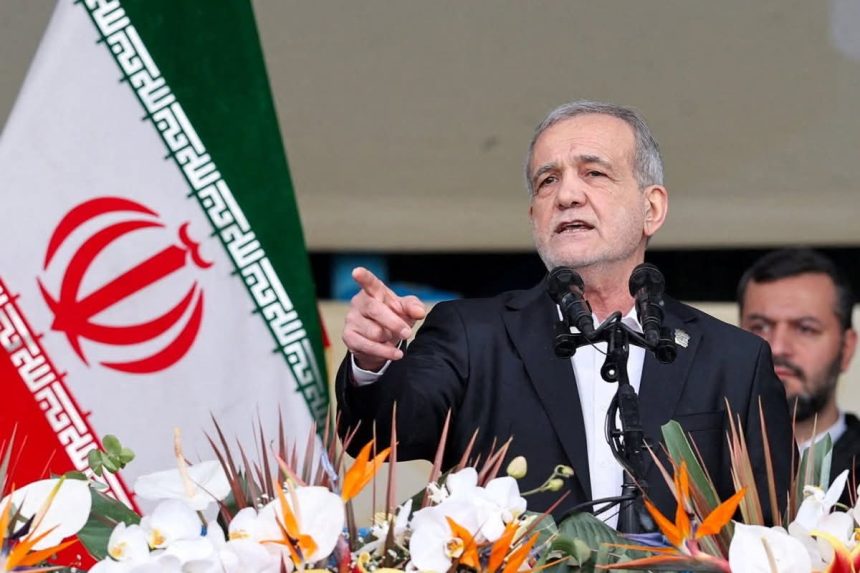
The mixed messaging began after Masoud Pezeshkian apologized to neighbouring countries for strikes launched by Iranian forces against locations hosting US military assets.
In a recorded message, Pezeshkian said Iran did not intend to violate the sovereignty of neighbouring states and promised attacks would stop unless military operations against Iran originated from their territory.
However, the statement was quickly contradicted by Iran’s powerful Islamic Revolutionary Guard Corps, which warned that Iranian forces would continue targeting locations used by the United States and Israel.
The IRGC said military bases, other interests linked to Washington and Israel across the region would remain legitimate targets if attacks on Iran continued.
Iranian Foreign Minister, Abbas Araghchi and parliament speaker, Mohammad Bagher Ghalibaf also emphasized Iran’s right to defend itself, reinforcing the hardline message from the military.
Analysts say the differing statements reflect the complex power structure within Iran’s political system.
While the President oversees domestic governance, strategic and military decisions are largely influenced by institutions aligned with the country’s supreme leadership and security apparatus, particularly the Islamic Revolutionary Guard Corps.
The situation has become more complicated following the death of Ali Khamenei, who was killed during the opening phase of the ongoing conflict.
Without a new supreme leader formally in place, some observers say Iran’s political and military institutions may be sending inconsistent signals to both domestic audiences and foreign governments.
Despite the conciliatory tone from some officials, attacks across the Gulf have continued.
Countries including Kuwait, Qatar, Saudi Arabia and the United Arab Emirates have reported missile or drone incidents linked to the escalating conflict.
Regional leaders have condemned the strikes, with the Gulf Cooperation Council warning that attacks on member states threaten stability in the Middle East.
For now, most Gulf countries have focused on intercepting incoming missiles and drones rather than launching retaliatory strikes against Iran, as concerns grow that a wider regional war could emerge.