


RismadarVoice Reporters
March 6, 2026
The Federal Ministry of Education has clarified that the Federal Executive Council’s (FEC) recent decision to amend the Act establishing the Nigerian Postgraduate Medical College (NPMC) does not equate a Doctor of Philosophy (PhD) degree with a medical fellowship.
The clarification followed widespread reports suggesting that the government had approved medical fellowships as equivalent to PhD degrees.
In a statement issued on Thursday by the Director of Press and Public Relations in the ministry, Folasade Boriowo, the ministry said the development had been widely misinterpreted in some sections of the media, prompting the need for clarification.
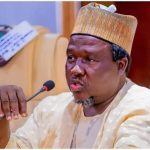
According to the statement, the Minister of Education, Dr. Maruf Alausa, explained that the approval granted by the FEC under the leadership of President Bola Ahmed Tinubu only allows the Nigerian Postgraduate Medical College to seek accreditation from the National Universities Commission (NUC) to award PhD degrees in relevant medical and research disciplines.
Alausa stressed that the decision was meant to expand the academic mandate of the college and not to alter the status of medical fellowship qualifications.
“The approval granted by Council enables the College to seek accreditation from the National Universities Commission to award Doctor of Philosophy degrees in relevant medical and research disciplines,” the minister said.
He noted that some reports had suggested that a PhD would replace or be regarded as equivalent to a fellowship in medicine, describing such interpretations as incorrect.
According to the minister, a medical fellowship remains a distinct and higher professional qualification in clinical practice, awarded to physicians who complete rigorous residency training and other postgraduate medical education requirements necessary for specialist practice.
He explained that the council’s decision simply broadens the institution’s academic responsibilities, allowing it – once accredited by the NUC to run doctoral research programmes in addition to its existing role of awarding fellowships to qualified physicians.
Under the proposed framework, doctors undergoing postgraduate medical training may also have the option of combining their fellowship programmes with structured doctoral research pathways.
Officials said the arrangement is designed to strengthen Nigeria’s capacity for advanced medical research and academic medicine while preserving the integrity and prestige associated with professional medical fellowships.
The ministry added that the reform introduces an additional academic pathway that complements the existing professional training structure, rather than replacing it.
It also noted that the policy aligns with the Federal Government’s efforts to strengthen postgraduate medical education, expand opportunities for research and innovation, and align Nigeria’s specialist training system with global standards.
The ministry reassured the public, medical professionals, and academic institutions that the approval would not diminish the value or status of medical fellowships in the country, instead represents a strategic step to deepen academic scholarship, enhance Nigeria’s competitiveness in global medical research and education.