RismadarVoice Reporters
March 5, 2026
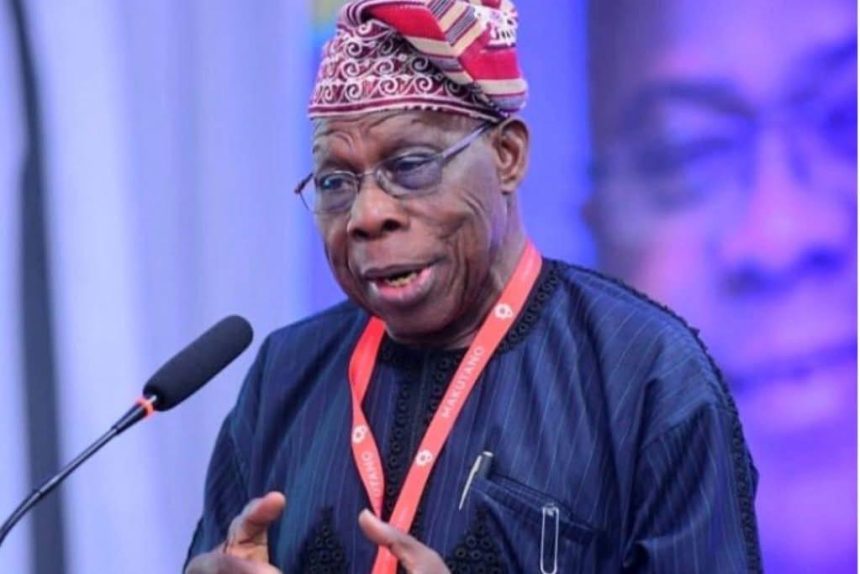
Former President Olusegun Obasanjo on Wednesday decried what he described as decades of leadership failure – responsible for Africa’s stunted development, insisting that the continent’s challenges stem more from poor governance than from geography or history.
Obasanjo spoke in Abeokuta while delivering a colloquium titled “Burden and Blessing of Leadership: Reflections from Global Africa to the World,” as part of activities marking his 89th birthday.
According to him, “Africa is not a problem to be managed but a promise to be fulfilled through honest, courageous, selfless, incorruptible and transformational leadership.”
He argued that despite its vast natural endowments, Africa continues to grapple with preventable disease, poverty, insecurity and conflict largely because leaders have failed to build strong institutions and prioritise public service over personal gain.
“The primary cause is leadership failure — the failure of those entrusted with power to serve the people rather than themselves; to build institutions rather than subvert them; to welcome accountability rather than flee from it,” he said.
Obasanjo lamented a recurring pattern in which new leaders assume office with lofty promises, only to succumb to corruption, suppress democratic institutions and govern in self-interest.
“The same man who spoke of democracy begins to engage in undemocratic practices, enthrone corruption and silence the press. Institutions become perverted to serve the leader, his family and political associates,” he stated.
Call for Leadership Formation, Not Just Training:
The elder statesman stressed that addressing Africa’s governance deficit requires more than technical leadership training. He advocated deliberate “leadership formation” that imbues leaders with enduring values and moral discipline.
“We must invest not only in teaching leaders what to do, but in forming leaders constituted with the attributes and values to do the job the right way,” he said.
He urged young Africans to treat democracy as a covenant with the people rather than a tool for electoral manipulation, describing democratic governance as imperfect but preferable to authoritarian alternatives many African nations experienced in the past.
While acknowledging democracy’s flaws, he suggested reforms tailored to Africa’s peculiar realities to strengthen equality, accountability and institutional independence.
Youth, Education and Security:
Obasanjo highlighted Africa’s youthful population as either a potential demographic dividend or a looming crisis, depending on how governments respond.
“With 24 million Nigerian children out of school, you have waiting recruits for the next generation of Boko Haram and bandits,” he warned, calling for urgent investment in education, healthcare, skills development and youth empowerment.
The Burden of Leadership:
Reflecting on his experience as both a former military Head of State and a two-term civilian president (1999–2007), Obasanjo described leadership as inherently burdensome and often lonely.
“The loneliness I speak of is the loneliness of final decision; when you alone must decide, and your decision will affect millions of lives,” he said.
He recalled commanding the Third Marine Commando Division at the end of the Nigerian Civil War in 1970, saying he chose not to shell Owerri in order to prevent further civilian casualties.
He also recounted his imprisonment under the late military ruler, General Sani Abacha, describing it as part of the cost of principled leadership.
“True leadership requires the willingness to hold a position when it is unpopular… It sometimes costs your freedom, as I learned in prison under Sani Abacha,” he said.
Blessings of Service:
Despite the burdens, Obasanjo said leadership also carries profound blessings, including the opportunity to serve and shape history.
He cited Nigeria’s Paris Club debt relief deal and the establishment of the Economic and Financial Crimes Commission (EFCC) as milestones aimed at improving governance and freeing resources for development.
He also reflected on handing over power to a civilian government in 1979, describing it as a defining moral moment.
“The blessing of having done the right thing when doing the wrong thing would have been easier,” he said.
“I Dey Kampe”
Addressing rumours about his death, Obasanjo dismissed as fake a purported letter circulating online in which he allegedly announced his passing.
“That is their wish and surely not God’s wish for me,” he said. “God has assured me He has more for me to do… I dey kampe as usual.”
At 89, the former president said what ultimately matters is not what his generation did or failed to do, but what younger leaders will do to change Africa’s narrative.
“A continent that fails its youth does not merely waste a generation; it plants the seeds of instability for the next,” he cautioned, urging a new era of accountable, transformative and people-centred leadership across Africa.