By Micah Jonah
February 28, 2026
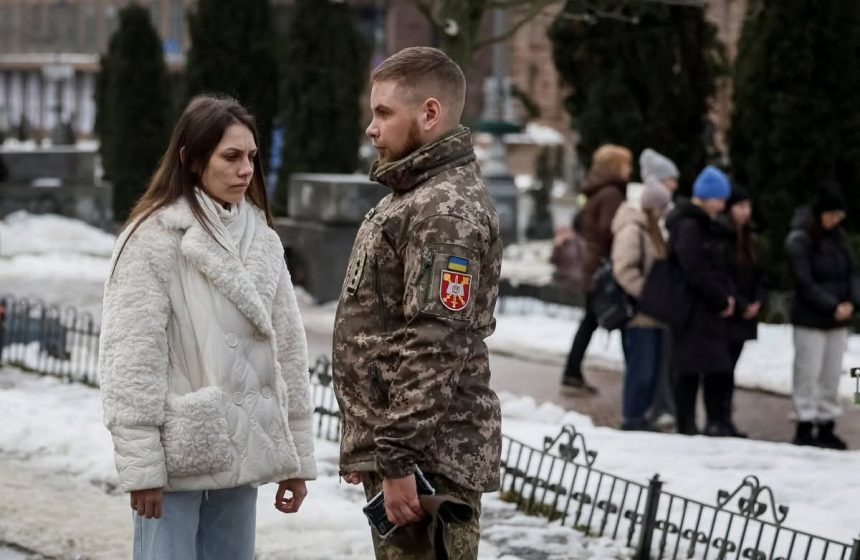
Ukraine has marked the fourth anniversary of Russia’s full scale invasion with fresh territorial gains in the south, even as Moscow intensified drone and missile attacks across the country.
President Volodymyr Zelenskyy said Ukrainian forces had regained between 300 and 400 square kilometres of territory in southern Ukraine since late January, signalling renewed momentum on parts of the frontline.
“You can’t say we’re losing the war. The question is if we will win,” Zelenskyy said, as the conflict entered its fifth year.
Ukraine’s commander in chief, Oleksandr Syrskii, confirmed the advances, describing them as limited but strategically significant. Analysts say the gains highlight growing weaknesses in Russia’s offensive capacity after years of grinding combat.
The Washington based Institute for the Study of War attributed Kyiv’s recent success partly to disruptions in Russian military communications, including the disconnection of unauthorized Starlink terminals used by Russian troops and temporary limitations on Telegram services.
Although Russia continues to occupy roughly 20 percent of Ukrainian territory, the pace of its advances has slowed considerably. European officials note that Moscow has seized only about 1.5 percent of Ukraine’s land over the past three years, at what they describe as a heavy human cost.
In eastern Ukraine, Russia recently secured control of Pokrovsk in the Donetsk region after a prolonged two year campaign. However, analysts say the town had lost much of its earlier logistical significance by the time Russian forces intensified their push.
Despite battlefield setbacks, Russia has escalated its aerial campaign. During the past week alone, Ukraine reported more than 1,500 drones and at least 90 missiles launched by Russian forces.
On Sunday, Russia fired 197 drones and 50 missiles. Ukrainian air defences intercepted the majority, though some struck infrastructure targets. A second major barrage on Thursday involved 420 drones and 39 missiles, with Ukraine claiming it neutralized about 90 percent of the drones and most of the missiles.
Zelenskyy said improved air defence systems helped protect key facilities in Kyiv and other regions, ensuring electricity supply remained largely stable despite repeated attacks on power infrastructure.
Ukraine has also stepped up long range strikes inside Russia. On February 21, Ukrainian made FP 5 “Flamingo” missiles reportedly struck the Votkinsk missile factory in Russia’s Udmurtia region, about 1,200 kilometres from the Ukrainian border. The plant is believed to manufacture several ballistic missile systems.
Military analysts described the strike as a notable development in Ukraine’s expanding capability to target high value industrial facilities deep inside Russian territory.
In separate operations, Ukrainian drones targeted energy and industrial sites in Samara, Tatarstan and Smolensk regions, as Kyiv seeks to disrupt Russia’s weapons, fuel supply chains.
Marking the anniversary in Kyiv, Zelenskyy stood alongside European leaders, including European Commission President, Ursula von der Leyen and European Council President, Antonio Costa, underscoring continued Western support.
The European Union has provided approximately 195 billion euros in financial, military and humanitarian assistance since the invasion and has pledged an additional 90 billion euros over the next two years.
As the war grinds into its fifth year, frontlines remain fluid but slowly moving, with both sides relying heavily on drone warfare, missile strikes and long range attacks to shape the battlefield.
For Ukraine, the recent territorial gains and improved air defences offer a measure of encouragement. For Russia, the conflict continues to test its military resources and economic resilience, with no clear end in sight.