Micah Jonah
February 14, 2026
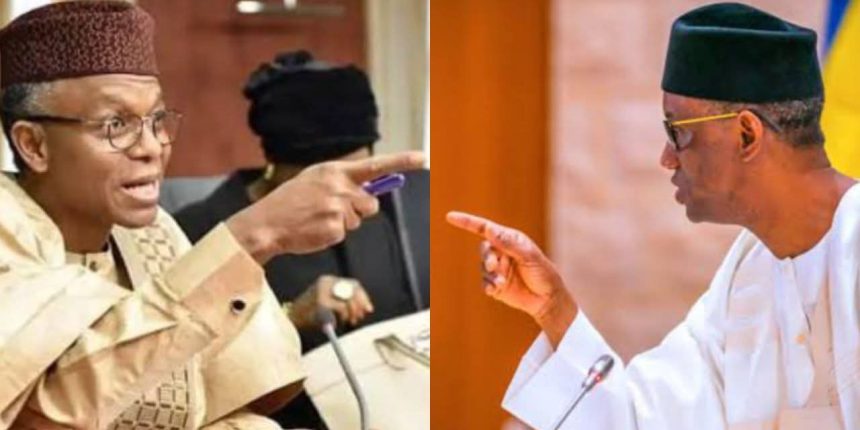
A fresh controversy has trailed comments by former Kaduna State Governor, Nasir El-Rufai, over an alleged phone conversation involving the National Security Adviser, Nuhu Ribadu.
El-Rufai, during an interview on Arise News, claimed that a phone call in which Ribadu allegedly directed his arrest was intercepted, recorded by a third party. He admitted that the interception was illegal but argued that similar tactics had previously been deployed against him while in office.
However, observers have raised doubts over the credibility of the allegation, noting that it is operationally unlikely for a serving National Security Adviser, with access to secure communication infrastructure, to issue a sensitive directive through an unsecured channel.
Analysts argue that the claim may be part of a calculated political strategy. They say that if authorities move to act on El-Rufai’s admission of illegal interception, such action could be interpreted by some as indirect validation of his allegation, potentially casting aspersions on the professionalism of the NSA’s office.
Conversely, ignoring the claim could fuel public speculation, with silence possibly misconstrued as tacit confirmation. A public denial, on the other hand, may further escalate the dispute, especially in an era where artificial intelligence tools can generate convincing voice simulations.
Political commentators also suggest that the remarks could be aimed at creating unease within Ribadu’s inner circle by insinuating internal surveillance or betrayal. Such insinuations, they note, can deepen mistrust and heighten political tension.
The development comes ahead of El-Rufai’s scheduled appearance before the Economic and Financial Crimes Commission on Monday, a move some analysts believe may have informed the timing of the public claim.
While the NSA’s office has yet to formally respond to the allegation, the unfolding exchange has added another layer to the ongoing political rivalry between the two former allies.