RismadarVoice Reporters
September 23, 2026
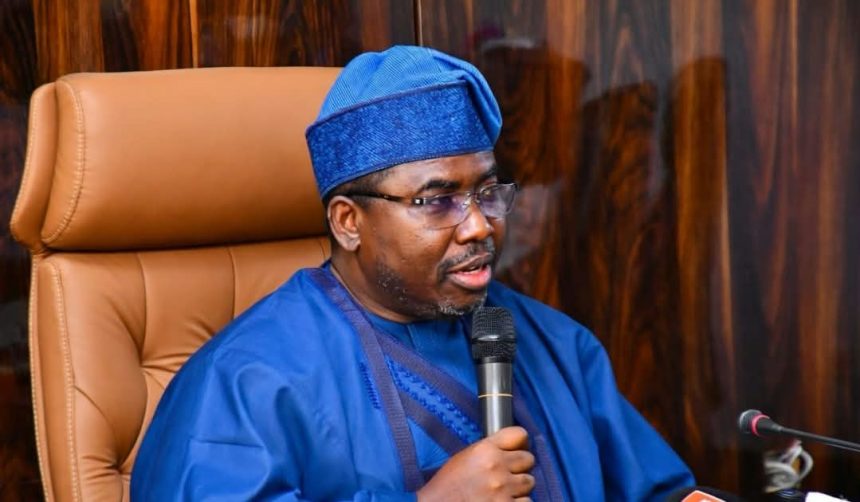
The Chairman of the Independent National Electoral Commission (INEC), Prof. Joash Amupitan, has assured Nigerians that there will be no predetermined results in the 2027 general elections, saying the commission is committed to conducting transparent polls.
Amupitan also disclosed that INEC was collaborating with the Nigeria Police Force to identify and arrest perpetrators of pre-election violence, particularly in states affected by insecurity.
He spoke during a panel session at the sixth Conference and Retreat for Senior Police Officers in Owerri, Imo State, themed “Developing a Nigeria Police Roadmap for Effective Management of Security During Elections.”
According to a statement issued by INEC’s Chief Press Secretary and Media Adviser, Adedayo Oketola, Amupitan identified insecurity as one of the major concerns ahead of the 2027 elections.
“There are still some states in Nigeria where you have a lot of insecurity, and it’s a major source of concern for us. Because that can be a source of disenfranchisement of Nigerians, and we don’t want any Nigerian to be disenfranchised,” he said.

The INEC chairman said the commission was working with the police, the lead agency for election security, to develop strategies for conducting elections in areas vulnerable to violence.
He also expressed concern over what he described as the growing culture of personality-based politics and intolerance among political actors.
Amupitan urged political parties and candidates to focus their campaigns on issues rather than personal attacks.
“Elections should be based on issues and not a campaign of calumny and denigration,” he said.
Amupitan said INEC was working with law enforcement agencies to ensure that anyone found culpable of offences under the Electoral Act was arrested, investigated and prosecuted.
He noted that while INEC has responsibilities relating to the conduct of elections, the powers of arrest and investigation rest with law enforcement agencies.
The commission, he added, was strengthening its intelligence-gathering capacity to tackle vote buying, which he said increasingly takes place outside polling units.
“These things are done and planned before the election. And most of the issues of vote buying now, you don’t even see them at the polling units. They are done outside of the polling units. So we need to activate intelligence,” he said.
Amupitan disclosed that INEC was working towards establishing a joint task force involving the Federal Ministry of Justice, the Attorney-General’s office and other security agencies to strengthen the response to electoral offences.


On litigation arising from political party primaries, Amupitan said such cases would not stop the conduct of the 2027 elections.
He explained that disputes arising from party primaries were matters for the courts and could proceed through the judicial process up to the final appellate level.
According to him, elections are contested by political parties rather than individual candidates, meaning pending litigation would not prevent a party from participating in the elections.
“Whichever decision comes out at the end of the day, INEC will abide by it,” he said.
The INEC chairman said the commission would also continue to improve its logistics and result-management systems while addressing shortcomings identified from previous elections.
Amupitan said recommendations from the Owerri retreat would be presented to the Inter-Agency Consultative Committee on Election Security (ICCES).
He said the committee includes the Inspector-General of Police, the INEC chairman and representatives of other security and relevant government agencies, including the Office of the National Security Adviser.


He added that recent electoral exercises had provided lessons that would inform INEC’s preparations for the 2027 general elections.
Amupitan said the commission remained focused on building public confidence in the electoral process and ensuring that elections are conducted in accordance with the law.
He also dismissed concerns that had preceded the Osun election, saying the commission had worked to ensure transparency.
“Just like some people were saying, oh, Osun is going to be this, Osun is going to be that, Osun is going to bring down the country. But we did everything possible, because what Nigerians are waiting for is just to be sure that the election is transparent,” he said.
INEC’s official calendar currently lists January 16, 2027, for the presidential and National Assembly elections and February 6, 2027, for governorship and State House of Assembly elections in participating states. (INEC Nigeria)
Amupitan reaffirmed the commission’s commitment to conducting a free, fair, credible and inclusive 2027 general election.