By RismadarVoice Media
December 28, 2025
Fresh reports of United States airstrikes against terrorist elements in northern Nigeria have sparked debate over why Sokoto State, rather than the country’s worst-hit terror zones, was selected as the initial target.
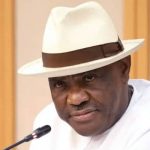
According to Emmanuel Ogebe, an international human rights lawyer and bilateral affairs expert, the choice of Sokoto appears to reflect strategic familiarity and operational convenience, rather than the scale of violence in the area.
Ogebe noted that Sokoto had previously hosted a U.S. military operation during President Donald Trump’s first term.
In 2020, American special forces carried out a daring rescue of U.S. citizen Philip Walton, who had been kidnapped by terrorists in the area, killing six of his captors.
He described Sokoto as an “unusual choice” for an opening strike, given that it is neither the epicentre of global jihadist activity in Nigeria’s North-East, where a deadly suicide bombing was recently recorded in Borno State, nor the North-Central region, where armed herdsmen attacks have claimed lives in Benue State.
“The North-West appears to be a safer operational bet for the U.S., given prior boots-on-ground experience, institutional memory from earlier missions,” Ogebe said.
He added that Sokoto’s proximity to Niger Republic, where the U.S. until recently maintained military bases, may also have influenced the decision, as American forces are more familiar with the terrain and intelligence architecture in the region.
The Nigerian government has since stated that the operation was conducted jointly with the United States and other allies.
Ogebe said this claim was credible, referencing lessons from the 2020 Walton rescue mission, which nearly failed due to the absence of confirmed Nigerian airspace clearance.
According to accounts in former U.S. Defence Secretary Mark Esper’s memoir, American aircraft carrying Navy SEALs were already airborne when it was discovered that Nigerian approval had not been secured, raising the risk of interception or engagement.
Clearance was reportedly granted at the last minute, allowing the mission to proceed.
“This history makes it unlikely that the U.S. would conduct strikes on Nigerian soil today without full coordination,” Ogebe said.
He also pointed to the loss of U.S. military bases in Niger, following a pro-Russia military coup as a factor reshaping Washington’s counter-terrorism posture in the Sahel, forcing adjustments in surveillance and strike operations across the region.
However, Ogebe questioned the broader impact of the Sokoto strikes, arguing that the area is not responsible for the bulk of mass civilian killings, particularly against Christian communities in Nigeria’s Middle Belt.
He cited figures indicating that more than 600,000 Christians have been displaced in parts of Benue State alone, numbers comparable to displacement across several North-Western states combined.
Ogebe also raised the possibility that the strikes may be linked to concerns over the abduction of American missionary pilot Dan Rideout in neighbouring Niger Republic, amid fears he could be trafficked to terrorist groups operating near the Nigeria-Niger border, similar to the Walton case.
“From a strategic standpoint, Sokoto does not explain itself unless there is a specific American interest being protected,” he said.
Ogebe, an award-winning international human rights lawyer based in Washington, D.C., has played a notable role in shaping U.S. congressional and foreign policy on Nigeria.
His advocacy contributed to the designation of Boko Haram as a foreign terrorist organization in 2013, Nigeria as a Country of Particular Concern in 2020.