By Micah Jonah, February 18, 2026
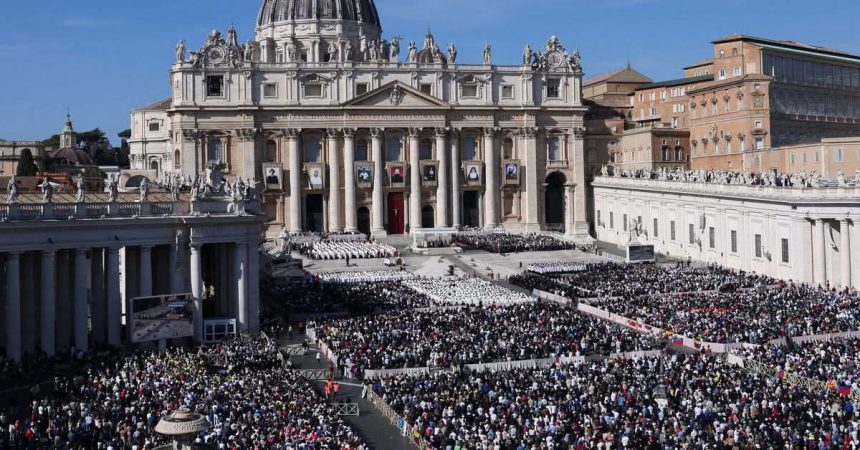
The Vatican has officially announced that it will not take part in Donald Trump’s “Board of Peace” initiative, with Cardinal Pietro Parolin, the Holy See’s top diplomat, emphasizing that crisis management should primarily be handled by the United Nations.
The board, which Trump proposed to oversee in January, was initially created to supervise Gaza’s temporary governance following a ceasefire last October. Trump later suggested expanding the initiative to address global conflicts, with the first board meeting scheduled in Washington to focus on Gaza’s reconstruction.
Cardinal Parolin stated, “The Holy See will not participate in the Board of Peace because of its particular nature, which is evidently not that of other States.” He stressed that international crisis situations are best managed through the UN framework, a point repeatedly emphasized by Vatican officials.
While Italy and the European Union will attend as observers, many international rights experts have criticized the board, citing concerns it resembles a colonial-style oversight mechanism, noting the absence of Palestinian representation. Some US allies in the Middle East have engaged, but most Western countries have refrained from joining.
The Gaza ceasefire has been fragile, with repeated violations resulting in hundreds of Palestinian deaths and four Israeli soldier fatalities. The ongoing humanitarian crisis in Gaza, which has caused widespread displacement and severe hunger has been condemned by multiple rights groups and a UN inquiry, with some describing the situation as genocidal. Israel maintains its actions are acts of self-defense following a deadly Hamas attack in late 2023.
Pope Leo, who rarely joins international boards, has consistently criticized conditions in Gaza. The Vatican continues to operate as a permanent UN observer, maintaining its independent diplomatic engagement while abstaining from the US-led initiative.
The decision underscores the Vatican’s stance that global crises should be addressed multilaterally, through established international frameworks rather than ad hoc initiatives led by individual countries.