By RismadarVoice Media
December 20, 2025
The United States government has temporarily suspended the processing of legal immigration applications filed by Nigerians and nationals of other newly added countries under an expanded US “travel ban”.
The move affects immigrants from several African and Asian countries, marks a further escalation of the Trump administration’s intensified crackdown on legal immigration this month.
Many of those impacted by the suspension are legal immigrants, already residing in the United States, including individuals seeking to adjust their immigration status or apply for US citizenship.
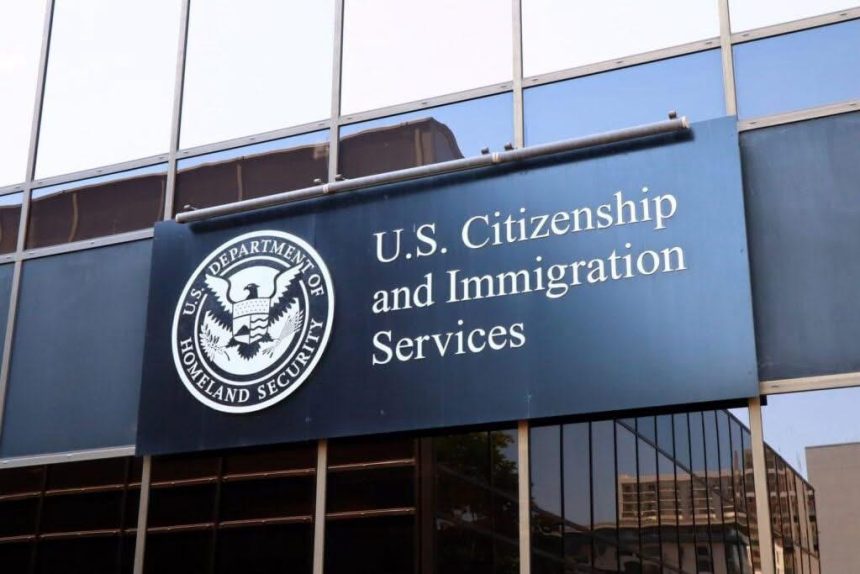
Earlier in December, the administration directed the US Citizenship and Immigration Services (USCIS) to freeze all immigration petitions including applications for permanent residency and naturalization submitted by nationals of 19 countries previously affected by the travel ban introduced in June.
The directive followed the Thanksgiving week shooting of two National Guard soldiers in Washington, D.C., an attack allegedly carried out by an Afghan national.
In response, the administration also suspended the adjudication of asylum cases handled by USCIS and halted the processing of all immigration and visa applications filed by Afghan nationals.
On Tuesday, President Donald Trump further expanded the travel ban to include 20 additional countries, fully barring travellers and immigrants from five new nations and partially restricting entry from another 15.
Speaking to newsmen on Friday, a US official, who requested anonymity because the changes had not yet been formally announced, confirmed that USCIS has extended its suspension of immigration cases to include nationals of the newly affected countries.
Countries facing full travel bans include Burkina Faso, Mali, Niger, South Sudan and Syria.
Those subject to partial restrictions include Angola, Antigua and Barbuda, Benin, Côte d’Ivoire, Dominica, Gabon, Gambia, Malawi, Mauritania, Nigeria, Senegal, Tanzania, Tonga, Zambia and Zimbabwe.
Previously, the suspension applied to nationals of Afghanistan, Burundi, Chad, Cuba, the Republic of the Congo, Equatorial Guinea, Eritrea, Haiti, Iran, Libya, Laos, Myanmar, Sierra Leone, Somalia, Sudan, Togo, Turkmenistan, Yemen and Venezuela.
In the latest proclamation, Trump also imposed full entry bans on Laos and Sierra Leone, which had earlier faced partial restrictions.
In a social media post late Thursday, USCIS Director Joseph Edlow appeared to confirm the expansion, stating that the agency was conducting a comprehensive security review.
“USCIS is conducting a comprehensive review of anyone from anywhere who poses a threat to the United States, including those identified in the President’s latest proclamation to restore law and order in our nation’s immigration system,” Edlow said.
Overall, the expanded travel ban now affects nationals of more than 60 per cent of African countries and approximately 20 per cent of nations worldwide.
The Trump administration has defended the policy, arguing that the restrictions are necessary to protect national security, address challenges in effectively vetting travellers from the affected countries.
However, the decision has sparked widespread criticism in Nigeria, with many describing the move as unfair, exaggerated, and diplomatically embarrassing. Critics have also warned of potential economic and diplomatic consequences, while disputing the security and religious freedom concerns cited by US officials.

Former senator Shehu Sani described the policy as “a clear signal that migrants from developing countries are no longer welcome.”