By Micah Jonah
March 1, 2026
United States lawmakers are renewing demands for war powers legislation after President Donald Trump ordered military strikes on Iran without prior congressional approval.
Democratic senators and representatives have described the attack as a dangerous escalation and are pressing for an immediate vote to block further unilateral military action.
Senator Tim Kaine, a leading sponsor of a War Powers Resolution, called the decision a “colossal mistake” and urged the Senate to reconvene at once. He insisted that lawmakers must go on record over what he termed an unnecessary, risky conflict.
House Minority Leader, Hakeem Jeffries echoed the position, saying the President bypassed Congress, abandoned diplomacy, thereby exposing American troops to potential retaliation.
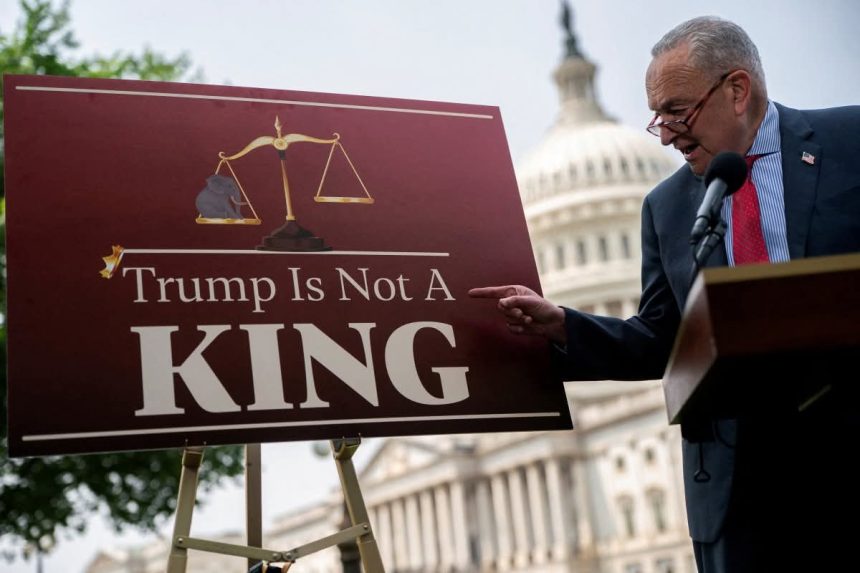
Senate Minority Leader, Chuck Schumer demanded classified briefings for all senators, arguing that the administration has not provided adequate details about the immediacy or scope of the threat posed by Iran.
Senator Mark Warner, vice chairman of the Senate Intelligence Committee, warned that the country risks repeating the “mistakes of the past,” referencing intelligence failures that preceded the Iraq war.
While Democrats are spearheading the legislative push, some Republicans have broken ranks; Congressman Thomas Massie described the strikes as acts of war not authorized by Congress, declared his opposition.
Senator Rand Paul also backed efforts to restrain presidential war-making powers, stating that his oath to the Constitution compels him to oppose unauthorised military action.
The US Constitution grants Congress the authority to declare war, though presidents of both parties have historically relied on executive powers to conduct military operations abroad.
With tensions rising in the Middle East, Iran vowing retaliation, the debate over executive authority versus congressional oversight is once again at the centre of Washington politics. Lawmakers now face mounting pressure to clarify the limits of presidential war powers in the face of a rapidly escalating conflict.