By Micah Jonah
January 15, 2026
The United States Senate has voted down a war powers resolution that sought to force President Donald Trump to obtain congressional approval before taking any further military action in Venezuela, after Vice President JD Vance cast the decisive tie breaking vote.
The final vote ended in a deadlock at 50 to 50 on Wednesday night, giving Vance the constitutional authority to step in and defeat the measure, a move that effectively keeps control of the Venezuela operation in the hands of the White House.
The resolution had gained momentum last week when five Republican senators joined Democrats to allow it proceed to a full vote. However, two of those Republicans later withdrew their support, shifting the balance and opening the door for the vice president to end the effort.
Senators Todd Young and Josh Hawley, who initially backed the motion to advance the resolution, voted against it during the final count. Their reversal proved critical, as supporters of the bill could only afford to lose one vote to secure passage.
Ahead of the vote, Young said he had received assurances from senior officials that there were no American ground troops currently operating in Venezuela and that Congress would be consulted in advance if large scale military operations became necessary.
He also released a letter from Secretary of State Marco Rubio stating that the administration would seek congressional authorization before introducing US forces into major hostilities in Venezuela, circumstances permitting.
The war powers resolution was introduced following President Trump’s announcement earlier this month that US forces had carried out an operation in Venezuela that resulted in the capture of President Nicolas Maduro and his wife, Cilia Flores, who were transported to the United States to face criminal charges.
The operation triggered explosions in Caracas and near military facilities, and reports indicated that several people were killed during the action, including foreign security personnel. Two US service members were also reported injured.
Following the operation, Trump and Rubio acknowledged that Congress was not notified in advance, arguing that secrecy was necessary to protect the mission and prevent leaks.
Under the US Constitution, Congress holds the authority to declare war, while the president serves as commander in chief of the armed forces. Over time, however, presidents have increasingly ordered military actions without prior congressional approval, often citing broad authorizations passed after the September 11 attacks.
Legal experts have questioned whether those authorizations apply to Venezuela. In response, the US Department of Justice released a memo arguing that the operation was framed as a law enforcement action and not an act expected to result in war, therefore not requiring congressional approval.
Despite that justification, several Republican Senators broke ranks with their party, saying the issue was about protecting the constitutional balance of power rather than partisan politics.
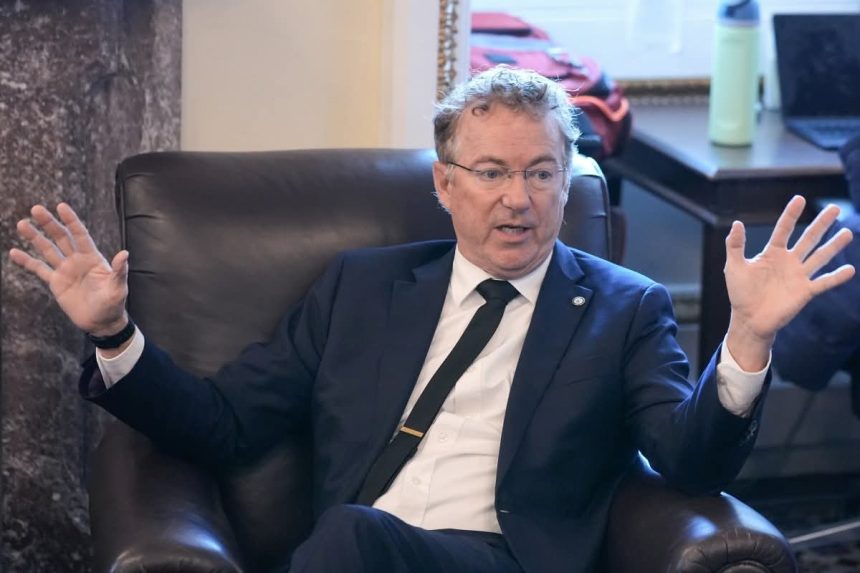
Senator Rand Paul, one of the Republicans who voted in favour of the resolution, said Congress must retain its authority over decisions to initiate war, warning that allowing the executive branch to act alone sets a dangerous precedent.
He stressed that the Constitution clearly assigns the power to begin war to lawmakers, not the president, and said defending that principle was more important than party loyalty.
President Trump publicly criticized Republican Senators who supported the resolution, accusing them of weakening national security and undermining his authority as commander in chief. Reports also indicated that the President personally contacted some lawmakers in an attempt to influence their votes.
With the resolution defeated, the administration retains broad freedom to continue its Venezuela policy without immediate congressional limits, even as debate continues over the legality and long term consequences of the military action.
RismadarVoice will continue to follow developments in Washington, impact on US foreign policy and constitutional governance.