Micah Jonah
February 10, 2026
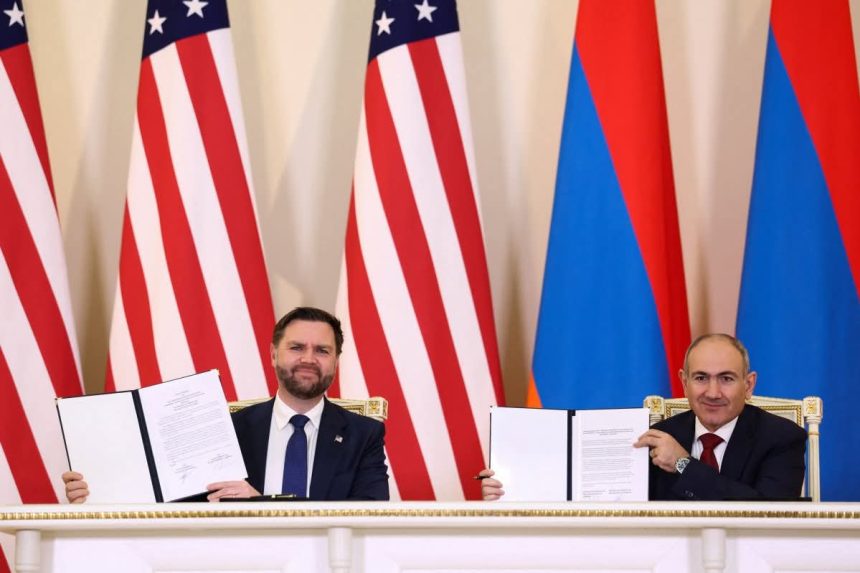
The United States and Armenia have signed a landmark civil nuclear cooperation agreement as Yerevan seeks to reduce its dependence on Russia for energy.
The deal, signed by US Vice President JD Vance and Armenian Prime Minister Nikol Pashinyan on February 9, 2026, is the first by a sitting US vice president in Armenia.
Known as a 123 Agreement, it allows the US to license nuclear technology and equipment to Armenia, opening the door for $5 billion in initial US exports and an additional $4 billion in longer-term fuel and maintenance contracts. The agreement focuses on small modular reactors and positions the US as a competitor to Russia, which supplied Armenia’s only existing nuclear power plant in Metsamor.
Prime Minister Pashinyan described the pact as a “new chapter in the deepening energy partnership between Armenia and the United States,” while Vance highlighted its potential to advance trade, energy security, and regional prosperity.
During the visit, Vance also promoted the Trump Route for International Peace and Prosperity (TRIPP), a 43km corridor connecting southern Armenia to Azerbaijan’s Nakhchivan exclave. The project, part of a prior US-mediated Armenia-Azerbaijan agreement, is set to include modernised rail, pipelines, and fibre optic infrastructure, bypassing Russia and Iran and enhancing connectivity between Asia and Europe.
Political analysts say the deal signals Armenia’s intent to diversify its energy partnerships, while Russia continues to advocate for its own nuclear proposals through Rosatom.
Vance is scheduled to visit Azerbaijan later this week to advance the corridor and broader regional cooperation initiatives.