By RismadarVoice Reporters
January 4, 2026
President Donald Trump on Saturday said his administration would allow American oil companies to operate in Venezuela following a US military operation that led to the capture of Venezuelan President Nicolás Maduro, even as Washington maintained its embargo on Venezuelan crude.
Trump spoke hours after the US military carried out air strikes on Caracas, Venezuela’s capital, in an operation that resulted in the arrest of Maduro and his wife.
The two were flown to New York City, where US authorities say they will face drug-trafficking and weapons-related charges.
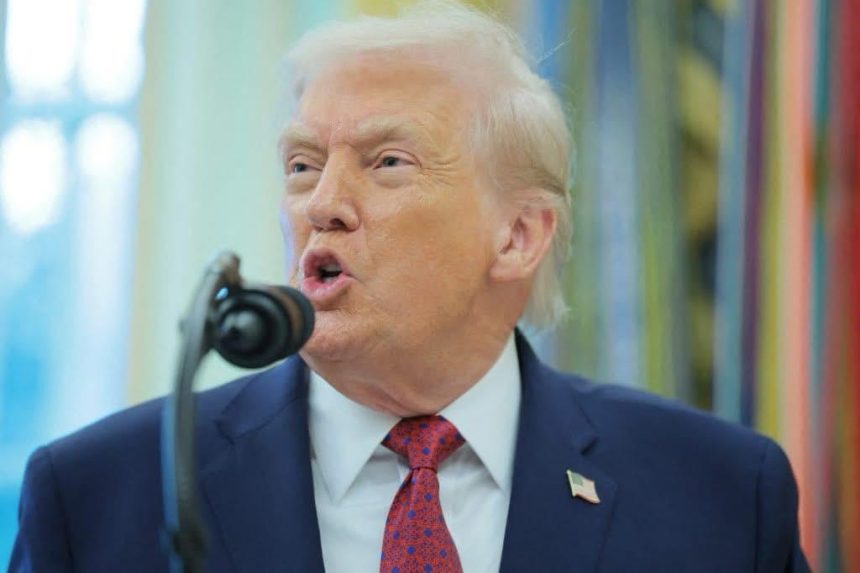
“We’re going to have our very large United States oil companies, the biggest anywhere in the world, go in, spend billions of dollars, fix the badly broken infrastructure, the oil infrastructure, and start making money for the country,” Trump told reporters at a news conference in Florida.
Despite the announcement, Trump said the US embargo on Venezuelan oil would remain fully in force, underscoring what analysts described as a contradictory policy posture.
The United States first imposed economic sanctions on Venezuela in 2017, expanding them to include oil exports in 2019, accusing the Caracas government of corruption, human rights abuses and criminal activity.
Trump accused the Venezuelan leadership of using oil revenues to finance “drug terrorism, human trafficking, murder and kidnapping.”
Venezuela currently produces just under one million barrels of crude per day, according to the Organization of Petroleum Exporting Countries (OPEC), down sharply from its peak after years of underinvestment, mismanagement and corruption. Much of its oil is reportedly sold on the black market at steep discounts due to international sanctions.
At the start of Trump’s second term in 2025, his administration revoked licenses that had allowed multinational energy companies to operate in Venezuela despite the sanctions. Chevron remains the only US company granted an exemption, operating four oil fields in partnership with state-owned oil firm PDVSA and its affiliates.
Washington has also imposed a total blockade on sanctioned oil tankers traveling to and from Venezuela, further restricting the country’s ability to export crude.
Venezuela holds an estimated 17 per cent of the world’s proven oil reserves, according to the International Energy Agency (IEA), but its heavy crude requires specialized refining. Several US refineries along the Gulf of Mexico are designed to process Venezuelan oil.
However, analysts say the United States does not need Venezuelan supplies.
“The United States is doing just fine without Venezuelan oil,” Stephen Schork of the Schork Group told AFP last month, noting
that Washington’s stance is driven largely by political, rather than energy consideration.