By Micah Jonah
January 19, 2026
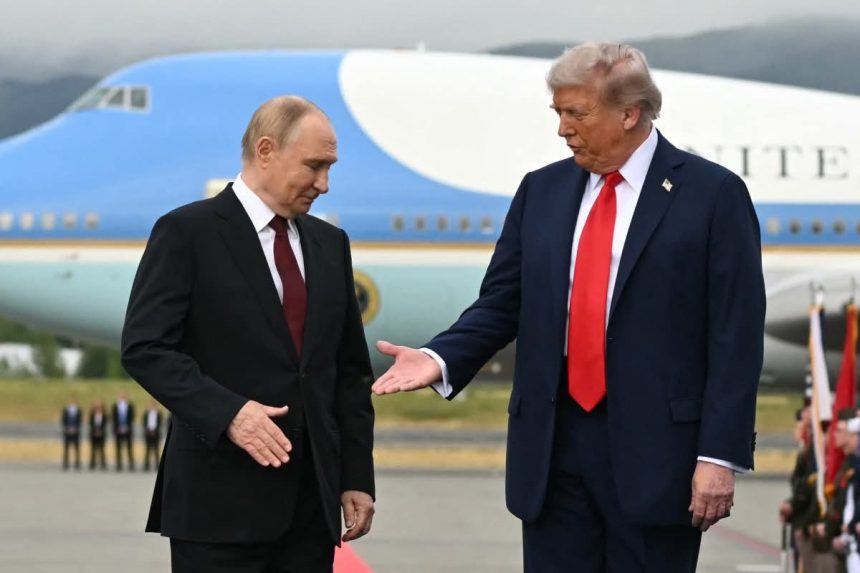
Russian President, Vladimir Putin has been invited to join United States President Donald Trump’s proposed “board of peace”, an initiative aimed at resolving global conflicts and overseeing governance and reconstruction in Gaza, even as Russia’s war in Ukraine continues with no clear end in sight.
The invitation was confirmed on Monday by Kremlin spokesman, Dmitry Peskov, who said Moscow was seeking to “clarify all the nuances” of the offer from Washington, without stating whether Putin would accept the role.
Trump had earlier promised to end the Ukraine war within 24 hours of returning to office, but nearly four years into the conflict, fighting continues on the ground while peace talks have slowed, turning the war into a prolonged battle of attrition.
The White House has reportedly contacted several world leaders and political figures to serve on the board, which would be chaired by Trump himself. Among those invited are Belarusian President, Alexander Lukashenko, a close ally of Putin, as well as leaders from the Middle East and Europe.
Moscow has historically tried to maintain balanced relations across the Middle East, engaging both Israel and Palestinian representatives. However, since the start of Israel’s more than two year war on Gaza and Russia’s invasion of Ukraine in 2022, the Kremlin has distanced itself from Israel while strengthening ties with Iran and several Gulf states.
Putin has in recent months spoken positively about Trump’s diplomatic efforts. In October, he praised Trump for attempting to resolve long standing global crises, saying that success in the Middle East would be a historic achievement.
Russia has repeatedly criticized Israel’s military campaign in Gaza, describing the situation as a full scale humanitarian catastrophe. At a meeting with Palestinian President, Mahmoud Abbas in May, Putin said Russia was providing regular assistance to the Palestinian people.
According to officials, the proposed board of peace is designed to implement Trump’s 20 point plan to end the Gaza war. The structure is expected to operate on three levels, involving representatives from the United States, Europe and Arab countries, with Palestinians assigned mainly to municipal and administrative duties at the lowest tier.
The plan has drawn criticism from analysts and policy experts, who argue that it sidelines Palestinian political leadership and risks replacing self determination with a commercial driven and externally controlled governance system.
As diplomatic outreach expands, uncertainty remains over whether global rivals involved in active conflicts can jointly participate in a peace framework, especially while wars in Ukraine and Gaza continue to shape international relations and deepen global tensions.