By Micah Jonah
January 10, 2026
Thousands of Irish farmers have staged large scale protests against a trade agreement between the European Union and the South American Mercosur bloc, raising concerns that the deal could severely damage Ireland’s agricultural sector.
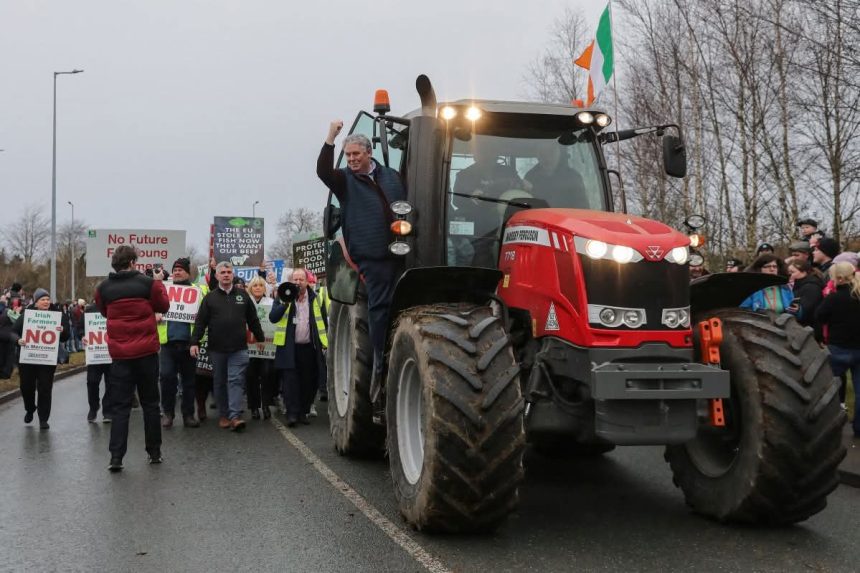
In the central Irish town of Athlone on Saturday, farmers drove tractors into the streets, gathered in large numbers, holding placards, chanting slogans opposing the agreement. Protesters accused European leaders of prioritizing industrial and commercial interests over farming communities.
The demonstrations came a day after a majority of EU member states gave provisional approval to the long negotiated trade pact, despite opposition from several countries including Ireland, France, Poland, Hungary and Austria. Their votes, however, were not enough to block the deal.
The EU Mercosur agreement, more than 25 years in the making, is expected to create one of the world’s largest free trade zones, linking the 27 member EU with Mercosur countries Brazil, Argentina, Paraguay and Uruguay. The deal would lower tariffs, allowing Mercosur nations to export agricultural goods and minerals to Europe, while EU countries would increase exports of machinery, chemicals and pharmaceuticals.
While business groups have welcomed the agreement, farmers across Europe have strongly opposed it, warning that cheaper agricultural imports from South America could undercut local producers. In Ireland, farmers are particularly concerned about beef, with estimates suggesting that up to 99,000 tonnes of lower cost beef could enter the EU market under the deal.
Beef and dairy farming remain major sources of employment in rural Ireland, and many farmers say they are already struggling to maintain viable incomes. The Irish Farmers’ Association described the EU decision as deeply disappointing and said it would intensify efforts to block the agreement in the European Parliament, which must still give final approval.
At the Athlone protest, farmers voiced fears about the long term future of rural communities. Some warned that the deal could lead to farm closures and economic decline in the countryside, while others questioned whether imported food would meet the EU’s environmental and production standards.
Irish Prime Minister, Micheal Martin has also expressed concern, saying Europe must ensure that imports produced under different regulatory conditions do not undermine the strict standards imposed on EU farmers.
Placards at the protest highlighted these worries, with messages questioning fairness in production rules and warning against sacrificing family farms to benefit other European industries.
Similar demonstrations were held on Friday in countries including France, Poland and Belgium, reflecting growing resistance among farmers across the continent. Although some concessions and compensation measures have been discussed, Ireland and France have pledged to continue opposing the deal as it heads toward what is expected to be a closely contested vote in the European Parliament.
For many Irish farmers, the issue goes beyond trade policy. Protesters said it also affects food quality, consumer safety and the survival of farming traditions that have shaped rural life for generations.