Micah Jonah, February 14, 2026
Recent rulings by the United States Supreme Court allowing heavily partisan voting maps in Texas and California have brought renewed attention to a landmark 2019 decision that curtailed federal courts’ authority over partisan gerrymandering.
In the 2019 case of Rucho v. Common Cause, the court ruled that federal courts cannot intervene in cases of partisan gerrymandering, declaring the issue a political question beyond judicial review. The decision effectively opened the door for state legislatures to redraw electoral maps favoring their political parties without federal court oversight.
The impact of that ruling is now evident as both Republican and Democratic-led states engage in aggressive redistricting ahead of the November midterm elections. In December, the Supreme Court allowed a pro-Republican Texas congressional map to stand. This month, it permitted a pro-Democratic redistricting plan in California.
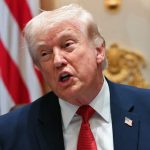
Texas lawmakers, reportedly encouraged by President Donald Trump, redrew congressional districts in a bid to flip up to five Democratic-held seats. In response, California’s legislature approved a revised map – targeting Republican-held districts. As the two most populous states, Texas and California hold significant influence in the House of Representatives.
Legal scholars say the 2019 ruling triggered what they describe as a “gerrymandering arms race,” with both parties attempting to maximize electoral advantage. Harvard Law professor Nick Stephanopoulos noted that a consistent federal limit could have curtailed the practice, while Loyola Marymount University professor Justin Levitt described extreme gerrymandering as widely unpopular among voters.
An October Reuters/Ipsos poll found that 61 percent of Americans believe recent redistricting efforts in states like Texas and California are “bad for democracy,” including majorities of both Democrats and Republicans.
Although the Supreme Court maintained in 2019 that it was not endorsing excessive gerrymandering, Chief Justice John Roberts wrote that partisan map-drawing is a political matter reserved for legislatures. Racial gerrymandering remains unconstitutional, but recent rulings have made such claims more difficult to prove.
With Republicans holding a narrow majority in the House, control of Congress hangs in the balance. Analysts say the outcome of these redistricting battles could significantly shape the political landscape in the months ahead, as both parties compete for an electoral edge.