

By Micah Jonah
January 10, 2025
South Africa has defended its ongoing naval exercises with Russia, China, Iran and other BRICS Plus partners, describing the drills as essential to safeguarding maritime trade routes and economic activity amid growing global tensions.
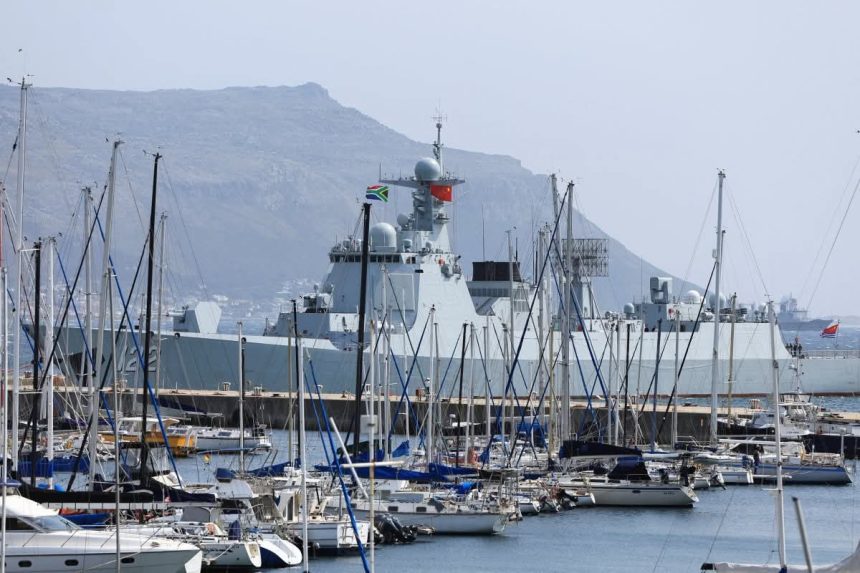
The weeklong exercises, known as Will for Peace 2026, began on Saturday off the coast of Cape Town. South African officials said the manoeuvres are aimed at strengthening cooperation among participating nations in response to increasing security challenges in international waters.
The drills come shortly after the United States seized a Russian oil tanker linked to Venezuela in the North Atlantic, citing violations of Western sanctions. The seizure followed renewed pressure by Washington on Venezuela and heightened geopolitical frictions involving several BRICS Plus countries.
South Africa’s joint task force commander, Captain Nndwakhulu Thomas Thamaha, told participants at the opening ceremony that the exercises represented more than military coordination. He said they demonstrated collective resolve among partner nations to cooperate in a complex and increasingly contested maritime environment.
According to Thamaha, the drills are designed to ensure the safety of shipping lanes and protect maritime economic activities that are critical to global trade.
The exercises are taking place against a backdrop of strained relations between the administration of United States President, Donald Trump and a number of BRICS Plus members, including South Africa, China, Iran and Brazil.
BRICS was originally formed by Brazil, Russia, India, China and South Africa but has since expanded to include Egypt, Ethiopia, Iran, Saudi Arabia, the United Arab Emirates and Indonesia.
South Africa’s defence officials said all member states were invited to participate. China and Iran deployed destroyer class warships, while Russia and the United Arab Emirates sent corvette vessels. South Africa contributed a frigate, while Indonesia, Ethiopia and Brazil are participating as observers.
Deputy Defence Minister, Bantu Holomisa said the exercises were planned long before the current surge in international tensions, should not be viewed as a response to United States actions.
He said South Africa’s focus remains on cooperation with BRICS partners to ensure the security of the Indian Ocean and Atlantic sea routes, adding that disagreements between the United States and other countries should not be interpreted as threats to South Africa.
The drills were previously known as Exercise Mosi and were initially scheduled for November before being postponed due to a scheduling conflict with the G20 summit in Johannesburg, which the Trump administration chose to boycott.
Washington has accused the BRICS bloc of pursuing policies hostile to United States interests, has warned that member states could face additional trade tariffs.
South Africa has also faced criticism from Washington over its close ties with Russia and its decision to pursue legal action against Israel at the International Court of Justice over the war in Gaza.
South Africa previously conducted joint naval exercises with Russia and China in 2019 and again in 2023, the latter coinciding with the anniversary of Russia’s invasion of Ukraine.