Micah Jonah
February 8, 2026
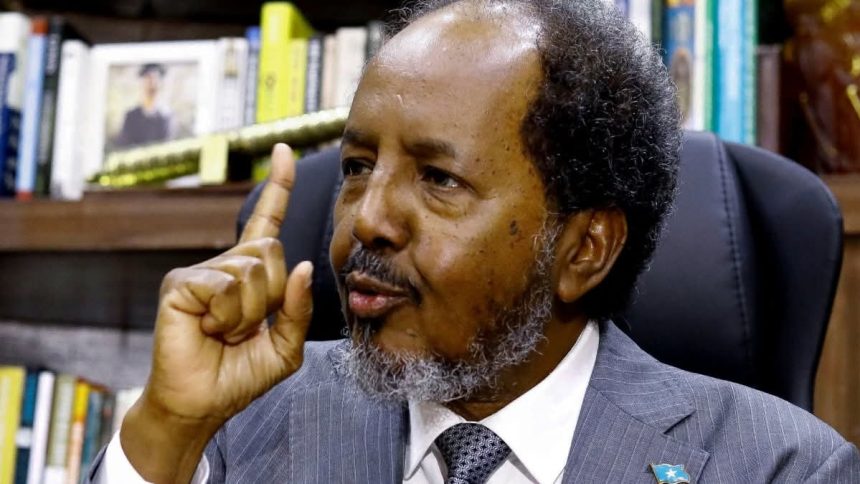
Somalia’s President, Hassan Sheikh Mohamud, has issued a firm warning to Israel, rejecting any attempt to establish a military base in the self declared region of Somaliland, describing such a move as direct threat to Somalia’s sovereignty, regional stability, and Africa’s collective security.
Speaking during an interview broadcast on Saturday, President Mohamud said Somalia would not tolerate foreign military presence in Somaliland, stressing that his government is prepared to confront any action that undermines the country’s territorial integrity.
According to the Somali leader, Israel’s reported engagement with authorities in Somaliland represents interference in Somalia’s internal affairs, further weakens the already fragile rules-based international order.
He warned that the presence of foreign military base in the strategically located Horn of Africa could embolden extremist groups, destabilise maritime trade routes, and heighten insecurity across the Red Sea corridor and the wider African region.
Somaliland, which declared independence from Somalia in 1991 but remains unrecognized by the African Union and the United Nations, occupies a critical geopolitical position along one of the world’s busiest shipping lanes. President Mohamud noted that any militarisation of the territory by external actors would pose risks not only to Somalia but also to neighbouring states and the continent at large.
He further linked Israel’s actions in the Horn of Africa to broader global concerns, arguing that selective application of international law and the pursuit of power politics are eroding institutions established to maintain global peace after World War II.
Somalia’s position has received backing from several African and Arab leaders, who continue to affirm Somalia’s unity and territorial integrity. The African Union has consistently maintained that Somaliland remains part of the Federal Republic of Somalia, despite the region’s decades-long push for international recognition.
While Somaliland’s leadership has welcomed Israel’s diplomatic outreach as a breakthrough after years of isolation, Mogadishu insists that no agreement reached without the consent of the federal government can stand under international law.
For Nigeria and other African states, the development underscores growing concerns about foreign interference on the continent and the need for African-led solutions to security and governance challenges. Analysts say the situation reinforces calls for stronger continental unity to resist actions that could redraw borders or inflame existing conflicts.
President Mohamud concluded by reaffirming Somalia’s commitment towards defending its sovereignty, warning that Africa must not become a playground for competing global interests at the expense of peace, stability, and self determination.