Micah Jonah, February 15, 2026
The Muslim holy month of Ramadan is expected to begin on February 18 or 19, depending on the sighting of the crescent moon.
Ramadan marks the month when the first verses of the Quran were revealed to the Prophet Muhammad over 1,400 years ago. Observers abstain from eating, drinking, smoking, sexual relations during daylight hours to attain greater “taqwa”, or consciousness of God.
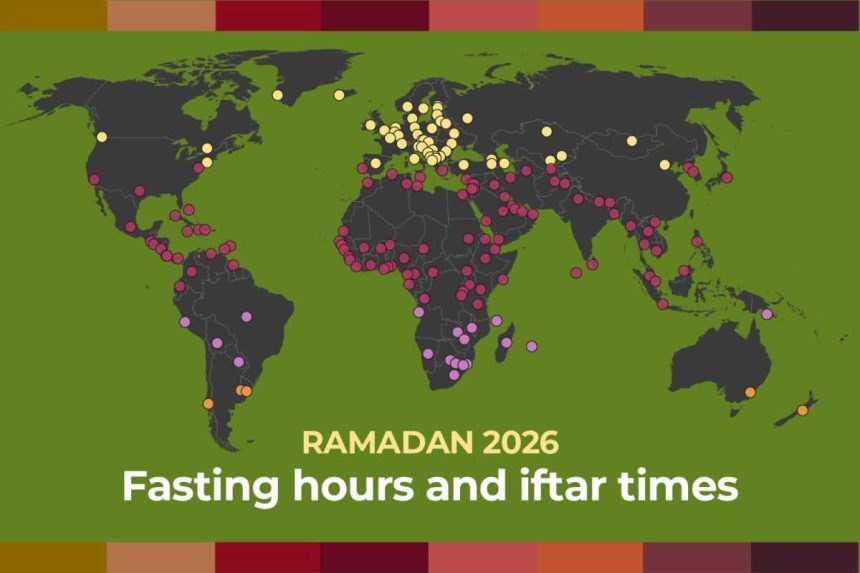
During the month, which lasts 29 or 30 days, Muslims observing the fast will refrain from eating, drinking from dawn to dusk. The period of fasting typically ranges from 12 to 15 hours, depending on the location.
The start date of Ramadan varies each year because the Islamic calendar is lunar-based, with months lasting 29 or 30 days. As a result, Ramadan begins 10 to 12 days earlier each year.
For nearly 90 percent of the world’s population living in the Northern Hemisphere, fasting hours will be shorter this year, will continue to decrease until 2031, when Ramadan coincides with the winter solstice, the shortest day of the year.
Muslims living south of the equator will experience longer fasting hours than last year. Because the lunar year is shorter than the solar year by 11 days, Ramadan will be observed twice in 2030 – first starting on January 5, then on December 26.
This year, fasting hours in Northern Hemisphere countries will start at around 12 to 13 hours on the first day, increase as the month progresses. In southern countries like Chile, New Zealand, and South Africa, fasting will last about 14 to 15 hours on the first day, gradually decreasing throughout the month.
Muslim-majority nations have various greetings for Ramadan in their local languages. The most common are “Ramadan Mubarak” and “Ramadan Kareem”, wishing the recipient a blessed, generous month, respectively.