Micah Jonah, February 2, 2026
Panama’s Supreme Court has annulled long standing port concession contracts held by Panama Ports Company, a subsidiary of Hong Kong based CK Hutchison, creating uncertainty over the future management of key terminals at the entrances of the Panama Canal.
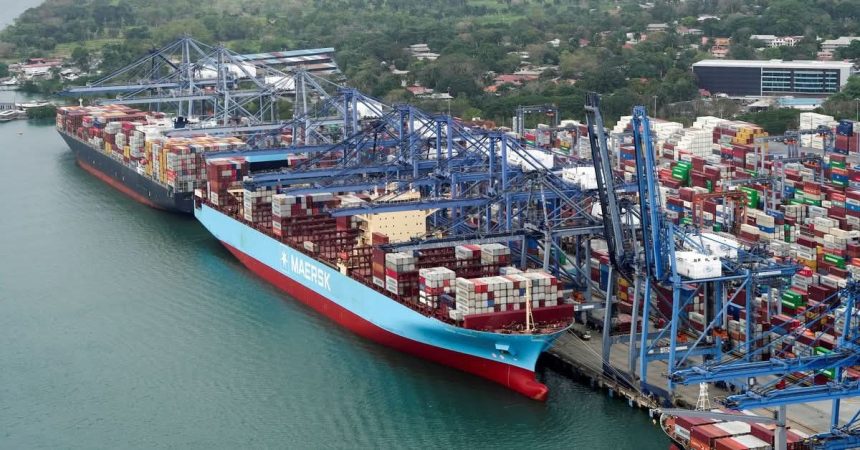
The ruling affects container terminals at Balboa on the Pacific side and Cristobal on the Atlantic side, which Panama Ports Company has operated since the 1990s. The court declared the legal framework backing the concessions unconstitutional, a decision that could force Panama to restructure its port operations, possibly launch new tenders.
The development clouds CK Hutchison’s plan to sell dozens of ports globally, including the Panamanian terminals, as part of a multi billion dollar divestment programme. The decision also comes amid heightened geopolitical tensions surrounding control and influence over critical global trade routes.
Panama Ports Company said it had not been formally notified of the ruling, described it as inconsistent with existing legal frameworks. The company stated that it had invested about 1.8 billion dollars in port infrastructure and technology over nearly three decades, warned that the decision could undermine legal certainty, affect thousands of jobs linked to port activities. It added that it reserved the right to pursue legal action at both national and international levels.
President Jose Raul Mulino said he had instructed the Panama Maritime Authority to engage immediately with Panama Ports Company to ensure continuity of operations. He assured that port activities would continue without disruption or layoffs while the government reviews the next steps.
China reacted strongly to the ruling, with officials indicating that measures would be taken to protect the interests of Chinese enterprises. Hong Kong authorities also expressed opposition to what they described as external pressure – harming the legitimate business interests of Hong Kong companies.
The Supreme Court said the laws and acts underpinning the concession agreement violated constitutional provisions. Critics of the contracts had long argued that the concessions were unfavourable to Panama and lacked sufficient public benefit.
With the Panama Canal handling about five percent of global maritime trade, authorities have stressed the importance of maintaining uninterrupted port operations to safeguard regional and global shipping flows. The government has indicated that alternative management arrangements, including public private partnerships, could be considered if new tenders become necessary.