RismadarVoice Reporters
March 1, 2026
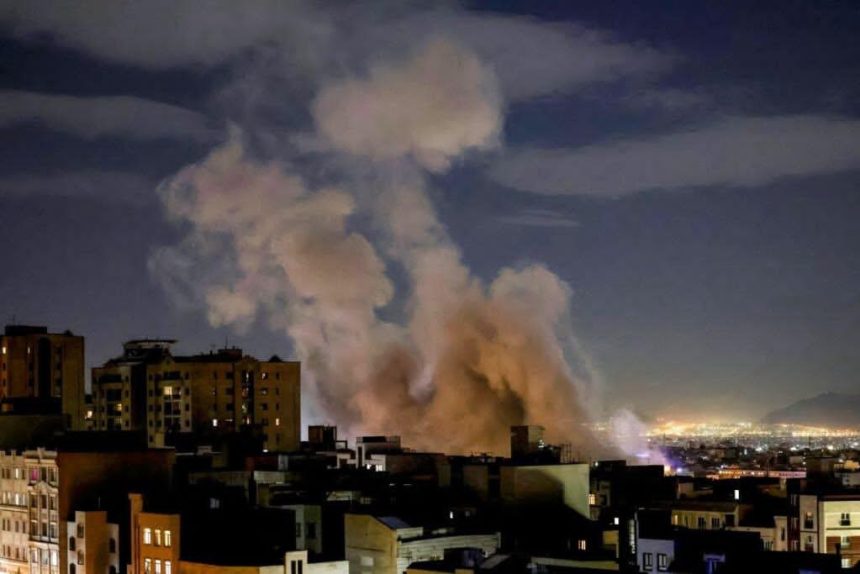
Global oil prices are expected to spike sharply when markets open late Sunday following US and Israeli strikes on Iran, with analysts warning that a prolonged conflict could weigh heavily on the global economy.
The oil market opens at 2300 GMT, and experts predict an immediate jump in prices into Monday amid escalating tensions in the Middle East.
Amena Bakr, Head of Middle East and OPEC+ Research at Kpler, said Brent crude could climb significantly.
“I expect oil prices to be between $85 and $90,” she said.
Brent crude, the international benchmark, had already factored in a geopolitical risk premium, trading above $72 per barrel on Friday compared to about $61 at the start of the year. A surge to the projected range would mark a substantial increase in energy costs worldwide.
Strait of Hormuz Under Threat
The regional escalation has heightened concerns over maritime transport through the Strait of Hormuz, a strategic chokepoint that handles roughly 20 per cent of global oil consumption.
Although the waterway has not been officially closed, disruptions are mounting. Some Chinese and Iranian vessels are reportedly still passing through, but major shipping companies have begun suspending operations along the route due to security concerns.
“In such a situation, insurance costs become prohibitive,” Bakr noted, adding that commercial viability becomes severely constrained even without a formal closure.
Jorge Leon, an analyst with Rystad Energy, warned that a full blockade could have dramatic consequences.
“While some alternate infrastructure could be used to bypass the Strait of Hormuz, the net impact from its closure would be a loss of 8 million to 10 million barrels per day of crude oil supply,” Leon said in a note.
Such a disruption would represent a major shock to global supply chains and energy markets.
Global Economic Risks
Oil-importing nations maintain emergency reserves, with OECD members required to hold at least 90 days’ worth of oil stocks. However, analysts caution that strategic reserves may not be sufficient to offset a prolonged disruption.
“If the blockade of the Strait of Hormuz continues, no matter how much spare capacity is in the strategic reserves, it is not going to fill that gap. That gap is just too big,” Bakr said.
Analysts say prices above $100 per barrel cannot be ruled out if tensions persist or escalate further, raising fears of renewed inflationary pressure and economic strain worldwide.
Markets will be closely watching developments in the region as the energy sector braces for volatility in the coming days.