RismadarVoice Reporters
February 13, 2026
Healthcare services at the Federal Neuropsychiatric Hospital, Barnawa, Kaduna, have been disrupted following an indefinite strike embarked upon by 128 nurses over alleged unresolved welfare and career progression issues.
The nurses, under the aegis of the National Association of Nigerian Nurses and Midwives (NANNM), commenced the industrial action in recent days, accusing the hospital management of failing to address grievances said to have lingered for more than two years.
Addressing journalists on Thursday, the NANNM Unit Chairman in the hospital, Comrade Enwereji Uchekukwu, said the strike became inevitable after several attempts to resolve the issues internally proved unsuccessful.
According to him, the Union formally wrote to the hospital management at least twice last year, seeking redress on critical concerns affecting nurses, but received no response.
He alleged that subsequent follow-ups revealed that the letters could no longer be traced.
“That showed a lack of seriousness in addressing our concerns. We had no option but to withdraw our services,” he said.
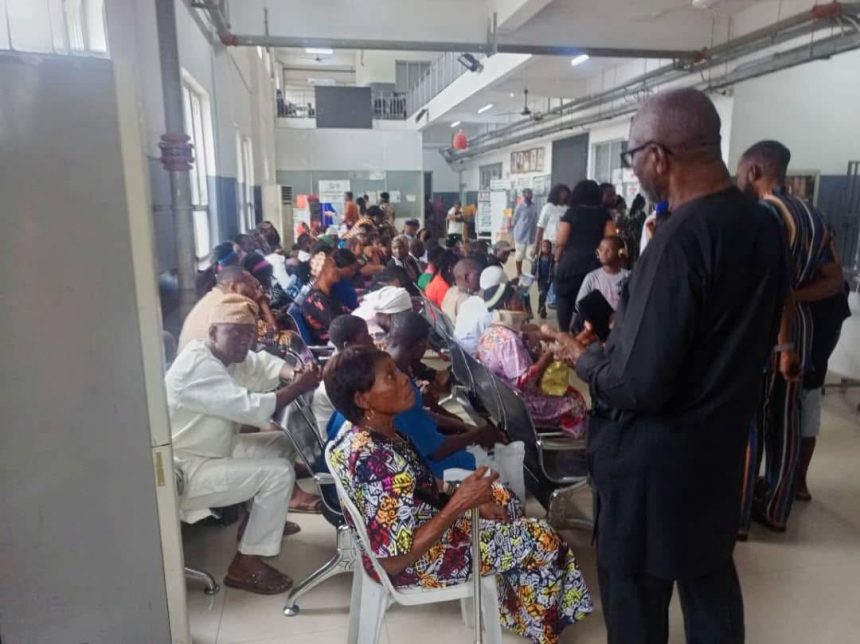
Uchekukwu confirmed that all 128 regular nurses in the hospital are participating in the strike, warning that patient care has been adversely affected.
“In some wards, one local nurse is attending to about 45 patients. That is unsafe. Both patients and staff are suffering,” he stated, adding that the Union remains open to dialogue if management addresses its demands.
Among the key grievances raised by the union is the placement of newly employed nurses on Consolidated Health Salary Structure (CONHESS) 6 instead of the approved CONHESS 7, which he described as the recognised entry level for nurses in federal institutions.
“The Federal Republic of Nigeria’s Scheme of Service clearly states that nurses should start at CONHESS 7.
Placing them on CONHESS 6 is inconsistent with what obtains in other federal institutions,” he said.
The Union also raised concerns over what it described as inconsistencies in staff nomenclature and structure at the hospital.
While the national Scheme of Service categorises nurses as officers, Uchekukwu noted that some nurses in the facility are still designated as superintendents.
He further faulted the alleged removal of the Principal Nursing Officer cadre, CONHESS 11, from the hospital’s promotion structure, describing it as a disruption to career progression.
“Career progression ordinarily moves from Nursing Officer to Senior Nursing Officer, then Principal Nursing Officer, Assistant Chief Nursing Officer, and Chief Nursing Officer. Removing the Principal Nursing Officer level disrupts career growth,” he added.
Reacting to the development, the hospital’s Head of Finance and Accounts, Mr. Lucky Abumere, described the strike as worrisome.
“No responsible management would be unconcerned when staff go on strike. We are worried,” he said.
Abumere disclosed that management had engaged the Union in meetings prior to the strike and maintained that some of the issues could have been resolved internally.
He explained that in the absence of a governing board, the matter had been referred to the Federal Ministry of Health, which supervises the hospital.
“The ministry is aware and has promised to intervene. We are awaiting their response while continuing to engage the nurses,” he said.
On the engagement of contract nurses, Abumere clarified that the practice is legal and necessitated by staff shortages and delays in federal recruitment processes.
He expressed optimism that ongoing dialogue and the anticipated intervention of the ministry would lead to the suspension of the strike and the restoration of normal healthcare services at the hospital.