By Micah Jonah, February 19, 2026
What began as a diplomatic standoff between Nigeria and the United States over allegations of “Christian massacres” has evolved into a deepening military partnership, with American troops now assisting Nigerian forces in counterterrorism operations.
In early November, United States President, Donald Trump sparked outrage in Nigeria after claiming that Christians were being systematically killed, warning of possible military action. He suggested that the US was prepared to intervene forcefully over what he described as religious persecution.
Nigeria’s President, Bola Ahmed Tinubu swiftly rejected the claims, insisting that while the country faces serious security challenges from armed groups and bandits, the violence is not targeted exclusively at Christians. The Federal Government maintained that Muslims and adherents of traditional beliefs have also suffered attacks.
Despite Abuja’s rebuttal, Washington placed Nigeria on its “Countries of Particular Concern” watchlist over religious freedom and signalled possible sanctions and aid cuts.
However, rather than escalating tensions, Nigeria adopted a diplomatic approach. The Tinubu administration signalled openness to US assistance in addressing insecurity, particularly in the northwest where armed groups have intensified attacks.
On December 25, the US carried out air strikes in northwest Nigeria. The United States Africa Command (AFRICOM) clarified that the operation was conducted at the request of Nigerian authorities.
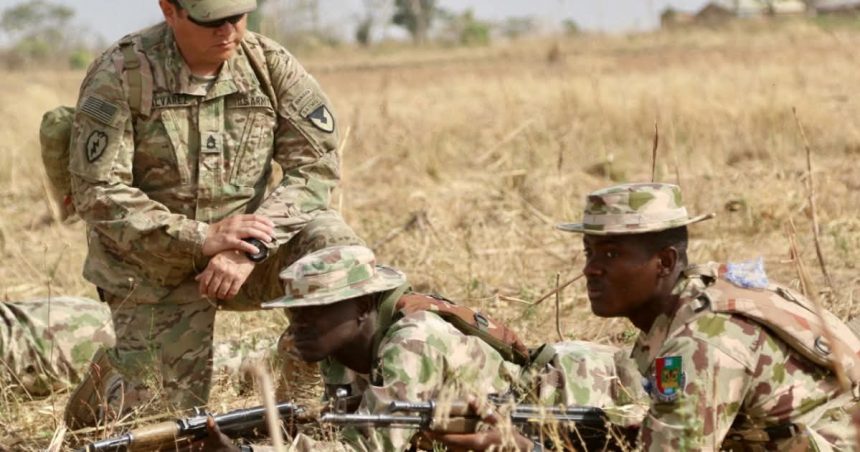
The cooperation has since expanded. This week, about 100 US military personnel arrived in Nigeria to provide training, intelligence sharing and technical support to Nigerian troops. Nigeria’s Ministry of Defence said the US forces would not engage directly in combat but would assist in targeting armed groups.
Security analysts say the shift reflects a strategic recalibration by Abuja. Ryan Cummings, director of analysis at Signal Risk, described the development as a “transition from confrontation to collaboration.”
In January, both countries inaugurated a joint working group in Abuja to address religious freedom concerns and strengthen counterterrorism cooperation. Nigeria’s National Security Adviser, Nuhu Ribadu, and US Under Secretary of State for Political Affairs, Allison Hooker attended the launch.
Reports also indicate that Nigeria hired Washington-based lobbying firm DCI Group in December to help counter narratives of religious genocide and maintain US support.
Analysts argue that Nigeria’s move was a calculated trade-off. The country gains access to advanced US intelligence and military support at a time when its security forces are overstretched. In return, it deepens strategic ties with Washington.
However, experts warn that a US military footprint, even in a limited advisory capacity, could heighten tensions. Armed groups such as Islamic State Sahel Province (ISSP) and Jama’at Nusrat al-Islam wal-Muslimin (JNIM) have historically used foreign intervention narratives to recruit fighters and justify attacks.
There are also domestic concerns; Critics fear that increased US involvement may fuel perceptions of compromised sovereignty, deepen existing political and religious divisions within Nigeria.
Nevertheless, some analysts believe that aligning with Washington was Nigeria’s most pragmatic option, given longstanding political, economic and security ties with the US.
As cooperation expands, the key question remains whether enhanced military coordination will address the deeper socioeconomic drivers of insecurity or merely suppress the immediate threats. For now, Abuja and Washington appear to be moving forward together in what observers describe as a cautious but strategic partnership.