By Micah Jonah
February 22, 2026
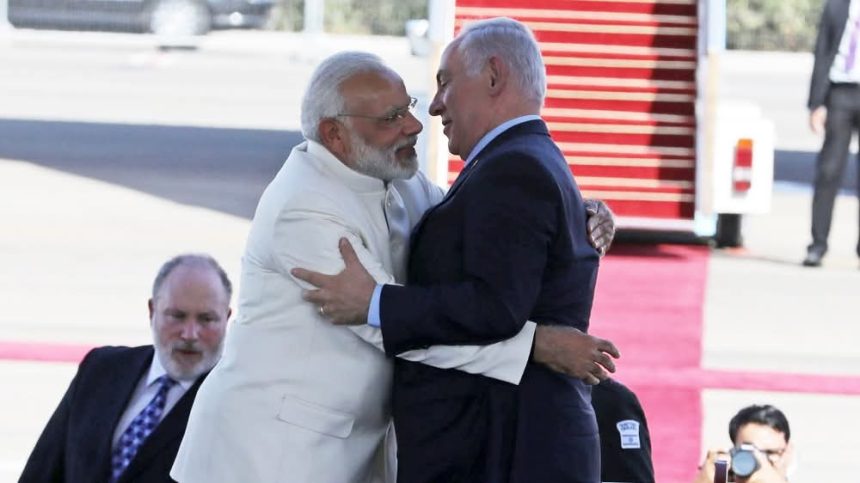
Indian Prime Minister, Narendra Modi is set to begin a high-stakes, two-day visit to Israel on February 25, marking a dramatic evolution in decades-long India-Middle East diplomacy. Nine years after his historic first trip in 2017, Modi arrives amid intensifying regional tensions and international scrutiny over Israel’s expansion in the occupied West Bank.
The visit signals the deepening of ties between New Delhi and Tel Aviv in defence, trade, and technology even as India officially maintains support for a two-state solution and Palestinian sovereignty. Analysts say the trip highlights India’s strategic balancing act: strengthening relations with Israel while sustaining ties with Palestine and Gulf nations.
From Gandhi to Modi: A Diplomatic Transformation
India’s support for the Palestinian cause dates back to Mahatma Gandhi, who opposed imposing a Jewish homeland on the Arab population. India voted against Israel’s creation in 1947 and consistently backed Palestinian statehood in the decades that followed.
Yet, behind the scenes, India gradually cultivated ties with Israel. In the 1960s, it accepted Israeli military support during regional conflicts. The 1970s and 1980s saw covert arms cooperation while India maintained overt diplomatic support for Palestine. Formal diplomatic relations were only established in 1992, after the Cold War reshaped global alignments.
Modi’s Era: Open Embrace of Israel
Since 2014, India’s relationship with Israel has transformed into a visible, politically open partnership. Defence and technology collaborations have soared, bilateral trade has grown from $200 million in 1992 to $6.5 billion in 2024, Indian professionals increasingly fill roles in Israeli companies. Modi’s 2017 visit laid the groundwork for what analysts call a “strategic embrace,” with cooperation spanning security, innovation, and economic integration.
The Palestine Question:
Despite warmer ties with Israel, India continues to officially support a sovereign Palestinian state. However, New Delhi has been cautious in condemning Israel’s actions in Gaza, abstaining from UN votes and human rights resolutions in recent years. India has criticized Israel’s West Bank expansion, but its response has been measured and delayed, drawings domestic opposition criticism ahead of Modi’s visit.
Opposition leaders accuse the prime minister of “hypocrisy” for strengthening ties with Israel while publicly supporting Palestine. Analysts suggest Modi will navigate the visit with careful diplomacy, signaling cooperation with Israel while avoiding a rupture with Palestinian leadership or Arab partners.
A Strategic Balancing Act:
Experts say India’s Middle East policy under Modi reflects a calculated strategy; leveraging Israel for defence, technology, and trade gains, while maintaining independent ties with Arab nations and engaging in regional conflict diplomacy. The timing of Modi’s visit, coinciding with US-Iran tensions, underscores New Delhi’s delicate position in a volatile geopolitical landscape.
Modi’s visit is more than a bilateral trip it, is a signal of India’s emergence as a global power capable of navigating conflicting interests while advancing strategic economic and security priorities.