By Micah Jonah, February 25, 2026
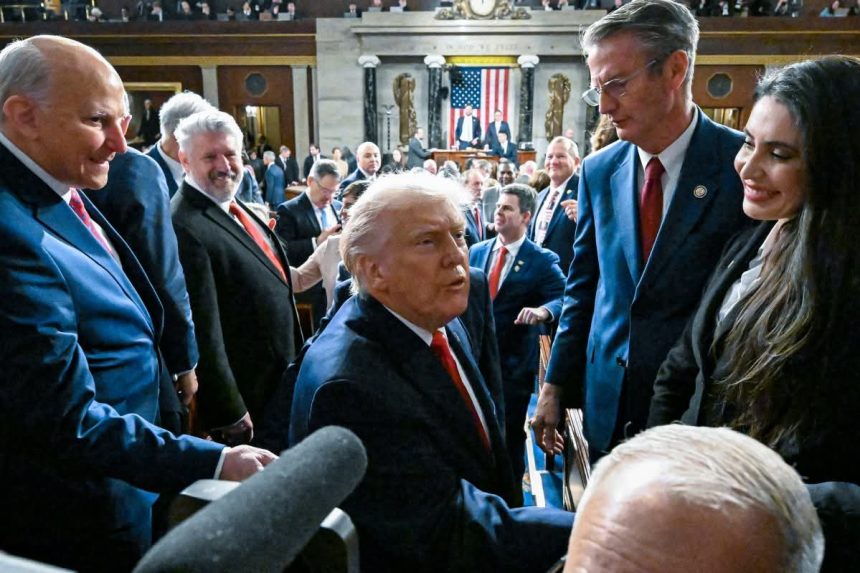
Donald Trump delivered the longest State of the Union address in US history on Tuesday night, outlining his administration’s policies on the economy, immigration, trade and foreign affairs while declaring that the country was experiencing a major turnaround.
The speech, which lasted one hour and 48 minutes, surpassed the previous record set by Bill Clinton in 2000. Trump opened and closed his address with optimistic projections about America’s future, describing the nation as “bigger, better, richer and stronger than ever before.”
Economy and affordability:
Trump emphasized what he described as a “roaring” economy, pointing to stock market gains and job growth. However, inflation and affordability remain concerns for many Americans. While price increases have slowed, food costs and other living expenses remain higher than a year ago.
The President blamed Democrats, including former President Joe Biden, for current affordability challenges. He also highlighted new initiatives, including an online prescription platform and executive actions aimed at limiting large-scale home purchases by investment firms.
Tariffs and Supreme Court ruling:
Trump addressed a recent decision by the Supreme Court of the United States that ruled parts of his reciprocal tariff policy unlawful. Calling the ruling “unfortunate,” he said new global tariffs of 10 percent had taken effect under alternative legal authority and insisted further congressional action was unnecessary.
Immigration and protests:
Immigration featured prominently in the speech, with Trump defending his administration’s strict border enforcement measures. He linked migration to crime, a claim disputed by various studies.
Democratic lawmakers including Ilhan Omar and Rashida Tlaib voiced objections during parts of the address. Representative Al Green was escorted from the chamber after staging a protest.
Iran and foreign policy:
On foreign policy, Trump revisited tensions with Iran, reiterating claims that previous US strikes had dismantled its nuclear programme. He said he preferred diplomacy but maintained pressure, stating that Iran had not made an explicit commitment to forgo nuclear weapons.
Televised moments:
The President highlighted several symbolic moments during the address, including recognition of US military personnel and athletes. He also referenced the US operation involving Venezuelan leader Nicolás Maduro and announced that more than 80 million barrels of oil had been received from Venezuela.
Democratic response:
The Democratic Party’s official rebuttal was delivered by Abigail Spanberger, who criticised Trump’s tariff policies and immigration enforcement, arguing that affordability challenges persist for many Americans.
As the country moves toward midterm elections in November, the speech underscored sharp partisan divisions and set the tone for what is expected to be a highly contested political season.