Micah Jonah
February 9, 2026
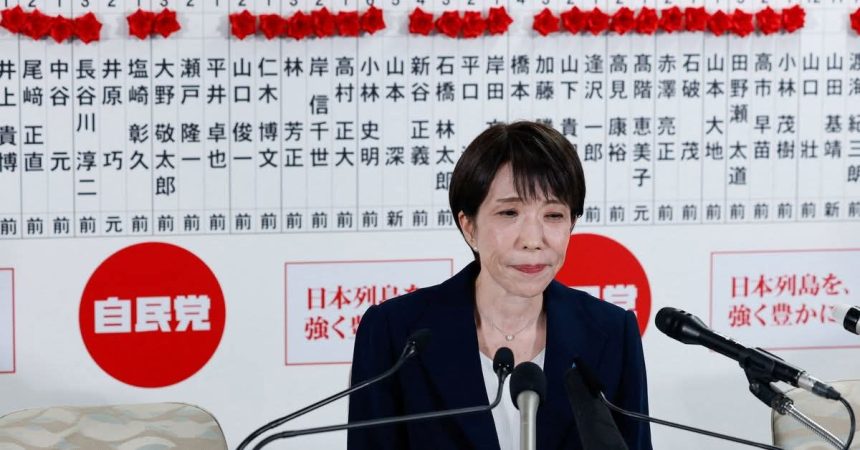
Japanese Prime Minister, Sanae Takaichi’s overwhelming election victory has strengthened her hand at home and is expected to sharpen Tokyo’s already tense relationship with Beijing, as she presses ahead with an ambitious security and defence agenda.
Takaichi’s ruling coalition secured 352 of the 465 seats in the lower house in Sunday’s election, a result that significantly weakens domestic opposition to her hawkish stance on national security. Speaking after the scale of the victory became clear, she said she would work tirelessly to deliver policies aimed at building a military capable of deterring threats to Japan’s territory, including areas close to Taiwan.
The Prime Minister has previously drawn strong reactions from China. In November, she sparked a diplomatic row by suggesting Japan could respond militarily if any attack on Taiwan also endangered Japanese territory. Beijing condemned the remarks, warning against what it described as a return to militarism and rolling out economic countermeasures, including restrictions affecting travel and exports of sensitive materials.
Analysts say China was a key undercurrent in the election. Former diplomats and security experts note that voters appeared to back a tougher posture in response to what they see as growing pressure and coercive actions from Beijing. Taiwan’s representative in Tokyo was among the first to congratulate Takaichi, describing the result as a signal that Japan would not be intimidated.
China’s foreign ministry reiterated after the election that it wanted Japan to withdraw comments on Taiwan and urged Tokyo to pursue peaceful development rather than repeat past mistakes. Takaichi responded by saying Japan remained open to dialogue but would act in line with its national interest.
The election win gives momentum to a major shift in Japan’s security policy. Defence spending is already being accelerated toward a record two percent of gross domestic product, with plans to ease restrictions on arms exports and expand joint defence projects with other countries. A new national security strategy is expected later this year, with some lawmakers suggesting defence outlays could eventually rise further.
Takaichi has also signalled her intention to pursue a historic revision of Japan’s post war pacifist constitution to formally recognize the Self Defence Forces as a military. While any amendment would still face significant hurdles, including approval in the upper house and a national referendum, the prime minister said the time had come to address the issue directly.
Despite the strong mandate, experts caution that economic pressures and the cost of tax cuts and stimulus measures could limit how far defence spending can rise. Even so, Takaichi’s decisive victory marks one of the clearest shifts yet in Japan’s security outlook, a move that Beijing is likely to watch closely.