By Micah Jonah
January 21, 2026
The Jamaat-e-Islami party, one of Bangladesh’s oldest Islamist political movements, is poised to play a decisive role in the country’s upcoming general election on February 12, a vote marking the first national poll since the 2024 student-led uprising toppled former Prime Minister Sheikh Hasina’s government.
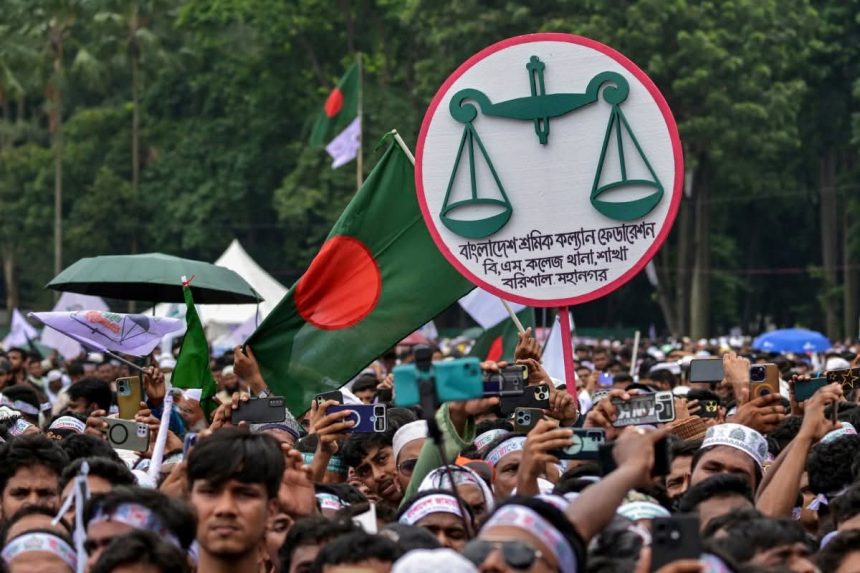
Abdur Razzak, a 45-year-old banker in Faridpur district, said supporters across the country are rallying behind Jamaat’s “scales” symbol as the party seeks to lead an electoral alliance with the National Citizen Party and the Liberal Democratic Party. Recent opinion polls indicate Jamaat has narrowed the gap with the Bangladesh Nationalist Party, traditionally the dominant opposition, suggesting a potential breakthrough.
“This is the first time we have a real chance of leading a government,” Razzak said. “The people see our struggle and know we are committed. That is why we will win support.”
Jamaat’s resurgence follows decades of political marginalization. During Hasina’s 15-year tenure, the party was banned, senior leaders were executed, and thousands of members faced imprisonment or persecution. The 2024 uprising changed the political landscape, resulting in Hasina’s exile and the lifting of the party ban, allowing Jamaat to reorganise its leadership under Shafiqur Rahman, Syed Abdullah Mohammed Taher, and Mia Golam Porwar.
Founded in 1941 by Syed Abul Ala Maududi, Jamaat opposed Bangladesh’s independence from Pakistan in 1971, siding with the Pakistani state and forming paramilitary units responsible for civilian deaths. The party was banned shortly after independence but was reinstated in 1979 and became a key coalition partner of the BNP. Despite setbacks from war-crimes trials under Hasina’s administration, Jamaat retained grassroots support, particularly through its student wing Islami Chhatra Shibir.
The party has sought to broaden its base beyond Muslims, fielding its first Hindu candidate, Krishna Nandi, from Khulna, highlighting minority rights to attract wider voter support. Analysts note that while Bangladeshis are increasingly religious, voters remain pragmatic and favour leaders with governance experience over ideological positions.
Geopolitical experts say Jamaat’s potential victory could influence Bangladesh’s foreign relations. A Jamaat-led government may face challenges in renewing ties with India, though it has already begun rebuilding engagement with Pakistan since Hasina’s departure.
“The February 12 election is about governance and reform, not ideology,” said a political analyst. “Voters will choose the coalition that promises stability, accountability, and progress.”
Jamaat leaders emphasise their commitment to the country’s secular constitution and insist they will implement reform measures to tackle corruption and ensure good governance, presenting themselves as a disciplined, organised force prepared to transform decades of political marginalisation into national leadership.