By Micah Jonah, February 20, 2026
Israeli authorities have imposed sweeping restrictions on Palestinians seeking to attend the first Friday prayers of Ramadan at the Al Aqsa Mosque compound in occupied East Jerusalem, allowing only 10,000 worshippers from the occupied West Bank to enter.
The decision represents a sharp reduction compared to previous years when hundreds of thousands gathered at one of Islam’s holiest sites for Ramadan prayers.
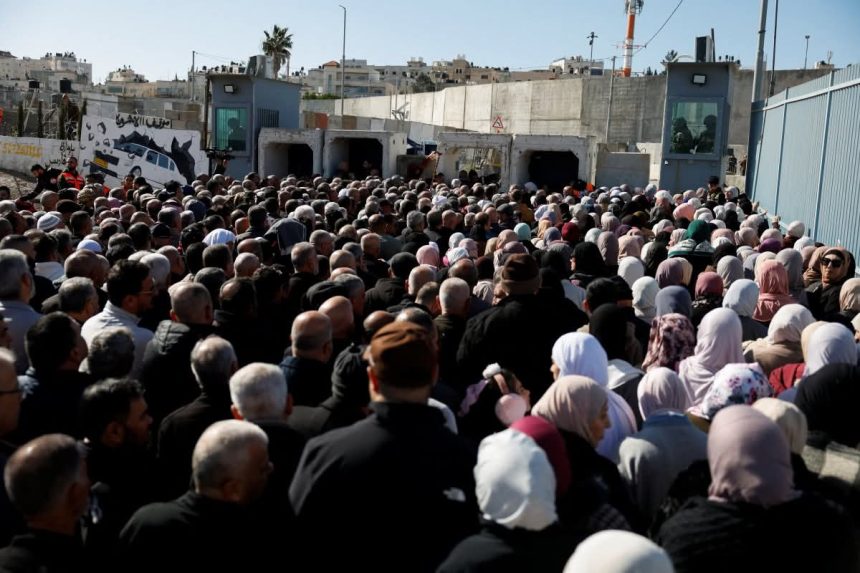
Reports indicate that long queues formed at the Qalandiya checkpoint near Ramallah as Palestinians attempted to cross into Jerusalem. Israeli officials stated that entry would be limited to permit holders, with eligibility restricted to children under 12, men over 55 and women aged 50 and above.
According to coverage by Al Jazeera, only about 2,000 Palestinians had crossed through Qalandiya by mid morning amid heightened Israeli military presence at checkpoints separating the West Bank and East Jerusalem.
Palestinian officials described the 10,000 quota as insignificant compared to the estimated 3.3 million Palestinians living in the West Bank. In previous years, attendance at the mosque during the first Friday of Ramadan reportedly reached up to 250,000 worshippers.
The restrictions come against the backdrop of escalating tensions in the occupied West Bank and East Jerusalem. The United Nations Office for the Coordination of Humanitarian Affairs has reported that more than 1,100 Palestinians have been killed in the West Bank since 2023, while over 10,000 people have been displaced.
Palestinian authorities and rights groups have also raised concerns about increasing violence by Israeli settlers, including shootings, land seizures and destruction of property.
Israel recently approved measures described by critics as a de facto annexation plan involving large areas of the occupied West Bank, a move that has drawn condemnation from dozens of UN member states.
For many Palestinians, access to the Al Aqsa Mosque during Ramadan is regarded as both a spiritual obligation and a longstanding cultural tradition. However, this year’s restrictions mean that thousands will be unable to break their fast in Jerusalem as they have done in years past.
The development further deepens tensions in a region already strained by conflict, humanitarian challenges and stalled diplomatic efforts.