By Micah Jonah, January 28, 2026
Israeli authorities have confirmed that there are no remaining captives in Gaza following the recovery of the remains of police officer Ran Gvili. This marked the completion of a central component of the ceasefire deal between Israel and Hamas.
The situation of Israeli and Palestinian captives has been central to ceasefire negotiations. Hundreds were held captive during the October 7, 2023 attacks, through subsequent rounds of detentions carried out by Israeli forces.
The return of captives in Gaza has been a focal point in Israel, dividing opinion between protesters advocating for negotiated releases and government hardliners prioritizing military objectives in Gaza.
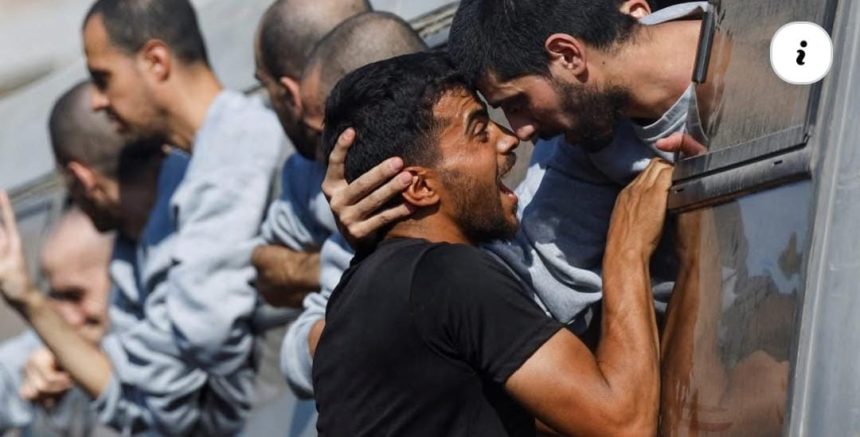
Palestinians detained by Israel have reportedly been held in conditions where rights groups document widespread abuse, including torture and sexual assault…
TIMELINE OF KEY EVENTS:
In October, 2023, Palestinian fighters attacked southern Israeli communities, killing around 1,200 people, mostly civilians, taking 251 Israeli and foreign captives according to Israeli data. Weeks later, Hamas released two Israeli-American captives and two elderly captives. Israeli forces recovered an Israeli soldier taken during the attack.
In November, an agreement between Israel and Hamas led to the release of 81 Israeli women and children, 24 foreign captives, and 240 Palestinian women and teenage detainees. The deal also allowed increased humanitarian aid into Gaza.
In December, Israeli forces in Gaza shot, killed three Israeli captives attempting rescue while holding a white flag, highlighting the risky application of force in the area.
In February, 2024, Israeli forces recovered two captives in southern Gaza amid domestic calls for negotiated releases.
In June, four captives were recovered during a raid in central Gaza’s Nuseirat neighbourhood. The operation, accompanied by bombings, killed at least 274 Palestinians.
In July, the UN Office of the High Commissioner for Human Rights reported that Israel held approximately 9,400 Palestinian security detainees, often without charge, in facilities where torture and sexual assault were widespread.
In August, six dead Israeli captives were found in a Hamas tunnel in southern Gaza, increasing pressure on Prime Minister Netanyahu to negotiate. A video later emerged, showing the gang-rape of a Palestinian detainee in the Sde Teiman detention facility.
In December, President-elect Donald Trump warned of consequences if remaining captives were not released before his inauguration. Israeli forces detained Dr. Hussam Abu Safia of Kamal Adwan Hospital, who was reportedly tortured while held without trial.
In January, 2025, a ceasefire resulted in the release of 33 Israeli captives, including eight deceased, and hundreds of Palestinians held in Israeli facilities. Negotiations for a second phase of releases were disrupted when Israel resumed military operations after six weeks.
In February, Israel released 600 Palestinian detainees, while Hamas released multiple Israeli captives, returned the bodies of deceased family members.
In March, Israel resumed military strikes in Gaza, killing at least 404 Palestinians on the first day.
In May, Hamas handed over the last surviving US captive, Edan Alexander.
In October, a ceasefire agreement facilitated the release of remaining captives and deceased remains in Gaza and Israeli detention facilities. Israel returned more than 100 Palestinian bodies, many showing signs of torture, while continuing military operations.
In November, Physicians for Human Rights-Israel reported that at least 94 Palestinians had died in Israeli detention from abuse, neglect, and malnutrition.
In January, 2026, Al-Aqsa Martyrs Hospital in central Gaza received nine living Palestinian detainees released by Israel, coinciding with the recovery of the final captive remains