By Micah Jonah
February 22, 2026
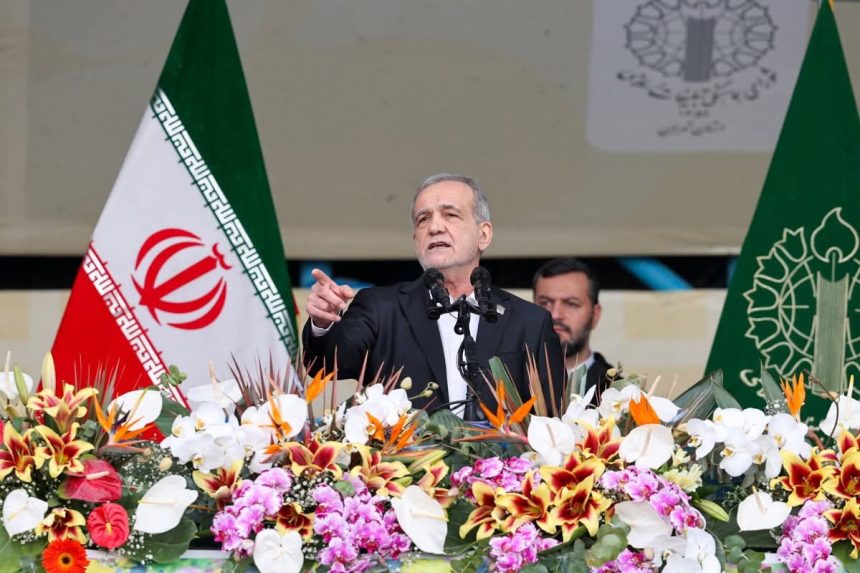
Iran’s President, Masoud Pezeshkian, has insisted that Tehran will not yield to pressure from the United States over its nuclear programme, even as Washington threatens limited military strikes.
Speaking in Tehran during a ceremony to honour Iranian Paralympians, Pezeshkian said, “We will not bow down in the face of any of these difficulties. World powers are lining up to force us to submit, but just as we have never bowed, we will not now.”
The warning comes amid growing US military presence in the Gulf, with two aircraft carriers and more than 120 combat aircraft deployed. The USS Gerald R Ford is en route to join the USS Abraham Lincoln strike group already stationed in the Arabian Sea, marking one of the largest US deployments in the region since the 2003 Iraq invasion.
Indirect nuclear talks between Iran and the US resumed earlier this month in Oman and Switzerland. While officials describe the negotiations as “constructive,” no breakthrough has been reported. Iranian Foreign Minister, Abbas Araghchi, confirmed that Tehran is preparing a draft deal to submit to Washington in the coming days.
Tensions remain high after last year’s breakdown of negotiations, which followed Israeli strikes on Iranian nuclear facilities at Fordow, Natanz, and Isfahan. The US participated in the attacks, escalating regional instability.
In a letter to the United Nations Security Council, Iran stressed that the US military build-up “must not be treated as mere rhetoric.” The country reaffirmed that while it does not seek war, any aggression would be met with a decisive response.
US President, Donald Trump warned earlier this month that Iran had “10, 15 days, pretty much, maximum” to negotiate a meaningful deal. Trump added that failure to reach an agreement could trigger limited strikes.
The rising tensions have prompted countries including Sweden, Serbia, Poland, and Australia to advise their citizens in Iran to leave, while ordinary Iranians remain anxious about the possibility of conflict.