By Rismadarvocie Media Media
December 31, 2025
Iran’s prosecutor general has warned of a “decisive response” if ongoing protests over the country’s rapidly depreciating currency, worsening economic conditions threaten public security.
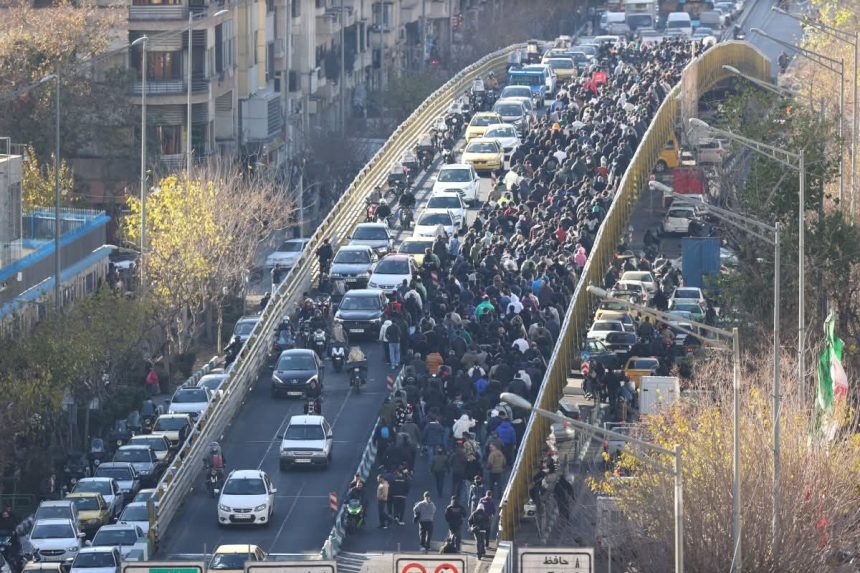
The demonstrations, which began in Tehran, have now spread to several other cities, drawing students and shopkeepers into the streets.
Mohammad Movahedi-Azad, speaking to Iranian state media, stated that while peaceful protests are legitimate, any attempts to turn demonstrations into tools of insecurity or destruction will be met with “a legal, proportionate, decisive response.”
The unrest began on Sunday when shopkeepers near Tehran’s Jomhouri area and the Grand Bazaar closed their businesses to protest the rial’s steep decline, which has fallen to approximately 1.42 million rials to the US dollar, compared with 820,000 rials a year ago.
Protests quickly spread to universities and institutions in Tehran, Isfahan, Yazd, and Zanjan, with reports of demonstrations at 10 universities nationwide.
In response, the government has pledged to listen to the protesters’ legitimate concerns.
Fatemeh Mohajerani, a government spokesperson, emphasized the administration’s commitment towards hearing the voices of its citizens and addressing social, economic grievances.
President Masoud Pezeshkian also met with labor Leaders and instructed officials to respond to the protesters’ demands, pledging to safeguard livelihoods, address economic challenges.
Analysts, however, note that public trust in the government is low. Trita Parsi, executive vice president of the Quincy Institute for Responsible Statecraft, said statements by government officials have fueled skepticism about the administration’s ability to resolve economic problems, raising questions about whether protests might expand beyond economic grievances.
Iran faces multiple crises beyond currency depreciation, inflation, which currently stands at around 50 percent. Severe water shortages, energy challenges, and restricted internet access are compounding public frustration. The country’s economy has been further strained by the reinstatement of international sanctions, linked to its nuclear program.

While state media has framed the protests as primarily economic in nature, observers caution that widespread discontent could evolve into broader demands, echoing previous nationwide demonstrations in 2022 and 2023 which followed the death of Mahsa Amini in police custody.
Those protests led to hundreds of deaths, mass arrests.
For now, authorities are balancing a firm security stance with promises to listen to citizens, as Iran navigates one of the most challenging economic periods in recent memory.