By Micah Jonah, February 16, 2026
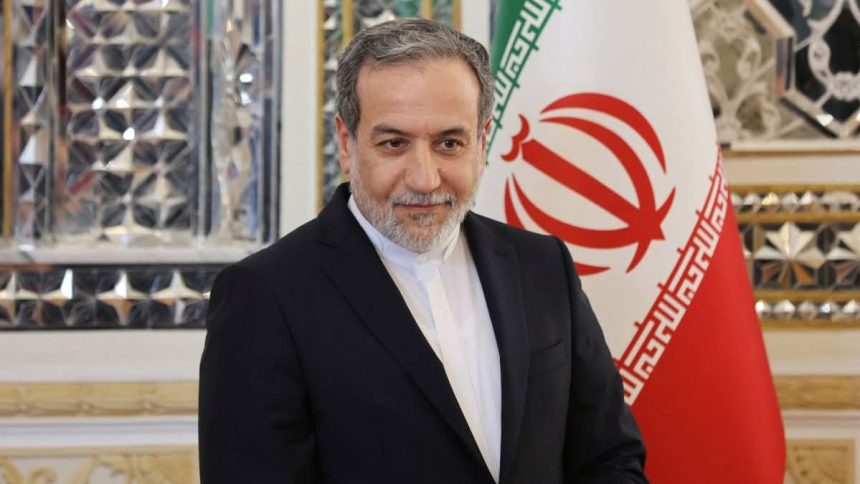
Iran’s Foreign Minister, Abbas Araghchi, has arrived in Geneva, Switzerland, for a crucial second round of nuclear talks with the United States, in what observers describe as a high-stakes diplomatic move aimed at preventing another major military confrontation in the Middle East.
The meeting comes amid heightened tension between Tehran and Washington, following increased US military presence in the region and sharp rhetoric from both sides.
Speaking ahead of the talks, Araghchi said he was entering discussions with “real ideas” aimed at securing what he described as a fair, equitable agreement.
“What is not on the table is submission before threats,” he declared in a post shared on social media.
The fresh round of negotiations follows renewed diplomatic contacts earlier this month over Iran’s controversial nuclear programme, which has remained a long-standing source of friction between the two nations.
Before engaging US representatives, Araghchi held talks with Rafael Grossi, Director-General of the International Atomic Energy Agency (IAEA), to address inspection concerns and technical matters surrounding Iran’s nuclear facilities.
The UN nuclear watchdog has been pushing for access to key Iranian sites reportedly damaged during last year’s 12-day conflict involving the US and Israel. However, Iranian authorities insist that due to potential radiation risks, inspections must follow strict official protocols.
Iran’s Foreign Ministry spokesman, Esmail Baghaei, acknowledged that the IAEA would play an important role in the ongoing diplomatic process. At the same time, Tehran renewed its criticism of the agency for failing to condemn previous strikes on Iranian nuclear facilities protected under the Nuclear Non-Proliferation Treaty (NPT).
Diplomatic sources also confirmed that Araghchi is expected to meet Oman’s Foreign Minister, Badr bin Hamad al-Busaidi, whose country previously mediated between Tehran and Washington.
Iran has consistently maintained that it will not accept Washington’s demand for zero uranium enrichment, insisting that its nuclear programme is for peaceful civilian purposes. Officials have also described the country’s missile programme as a “red line” that cannot be negotiated.
Meanwhile, the United States has continued to reinforce its military footprint in the region. President Donald Trump recently suggested that a change of leadership in Iran “would be the best thing that could happen,” while authorising the deployment of an additional aircraft carrier.
Reports indicate that US Special Envoy Steve Witkoff and Jared Kushner are likely to represent the White House during the Geneva discussions, alongside senior military officials.
The talks come barely weeks after Iran faced nationwide protests that turned deadly, with Tehran accusing the US and Israel of backing unrest. International human rights organisations, however, have blamed Iranian authorities for the widespread use of force against demonstrators.
As negotiations resume, hardline lawmakers in Iran’s parliament have warned against granting broad inspection access without firm guarantees protecting national sovereignty and nuclear infrastructure.
Political watchers say the coming days will test whether diplomacy can prevail over rising military tension, as both sides attempt to avoid another full-scale conflict that could destabilize the wider region.
All eyes are now on Geneva.