By Micah Jonah
January 23, 2026
Foreign and domestic investors have welcomed sweeping economic reforms introduced by Vietnam’s top leader, To Lam. Though economic experts say his ambitious target of sustaining double digit growth over the next few years may be difficult to achieve.
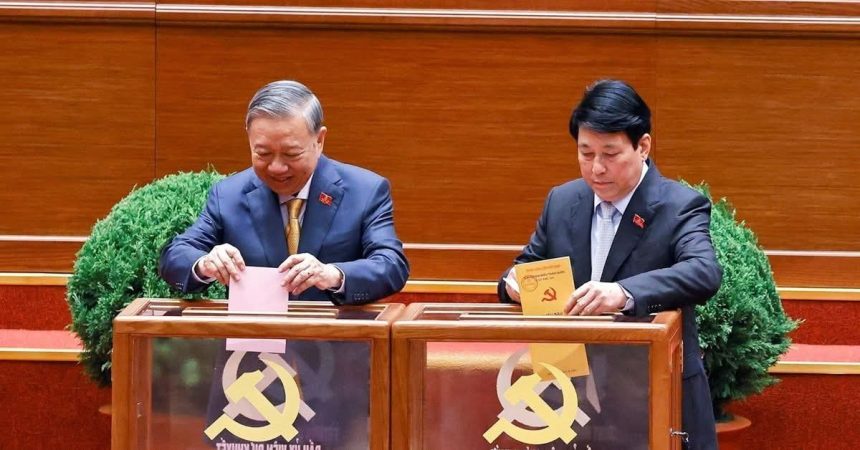
Lam, who was recently reaffirmed as General Secretary of the Communist Party, has outlined a new economic direction focused on innovation, digital expansion, stronger participation of private sector conglomerates, as the country seeks to reduce its long standing dependence on cheap labour and export driven manufacturing.
Since assuming office in mid 2024, Vietnam has recorded stronger growth than many countries in Southeast Asia, while its stock market witnessed significant gains last year, boosting investor confidence despite pressures from global trade tensions and climate related disruptions.
Under the new strategy, large domestic companies are expected to drive investment in infrastructure, technology and industrial expansion, while government maintains close policy supervision. Supporters say the model could accelerate development, but analysts caution that excessive state control may limit competition and discourage smaller businesses.
Lam has publicly committed to achieving annual economic growth of not less than 10 percent until 2030, following improved performance last year. However, international financial institutions project slower growth in the short to medium term, pointing to weakening global demand, trade uncertainties and rising production costs.
Economic analysts note that for such rapid growth to be sustained, household incomes and domestic consumption must rise significantly, a situation that could weaken Vietnam’s competitiveness as a low cost manufacturing destination for multinational firms.
In addition to economic reforms, the government has embarked on wide ranging administrative restructuring, cutting thousands of public service jobs and reducing layers of government to speed up approvals and attract investors. While many business leaders have applauded the move, some investors say the transition has created temporary regulatory uncertainty in certain sectors.
Trade relations also remain a major concern. Although exports to the United States have continued to rise, concerns over supply chains and compliance with trade rules could affect future market access, especially amid ongoing geopolitical tensions.
Despite these challenges, analysts maintain that Vietnam is positioned to remain one of the fastest growing economies in the region, but achieving and sustaining double digit growth, they say, will depend on effective policy implementation, improved regulatory clarity and stable global economic conditions.