By Anamati Inyang, November 18, 2025
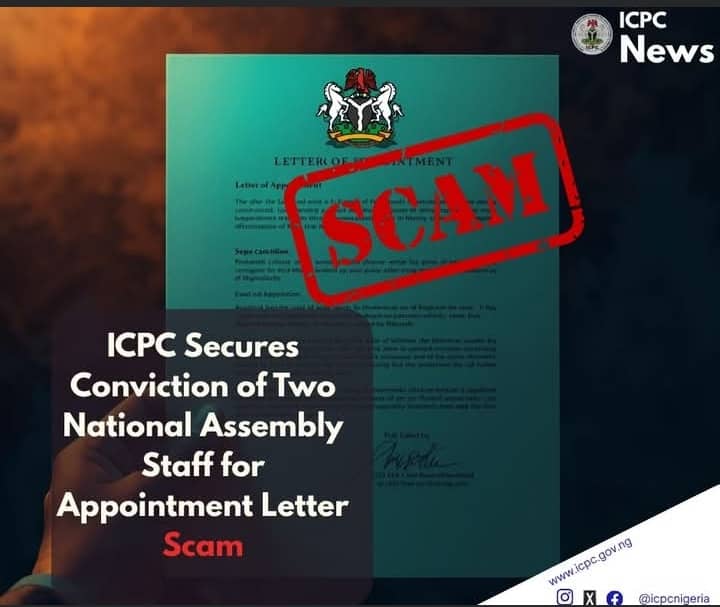
The quiet corridors of public institutions often conceal stories of courage, deception, and the relentless pursuit of accountability. One such story unfolded recently as the Independent Corrupt Practices and Other Related Offences Commission (ICPC) brought to light a forgery scheme involving two staff of the National Assembly, Ibrahim Suleiman Umar and Tijani Adam Goni.
Their case, rooted in a forged letter of employment, speaks to a larger national conversation about integrity in the public sector.
According to case records, the duo conspired to produce a falsified Federal Inland Revenue Service appointment letter dated June 11, 2021, in favour of one Mustapha Muhammad.
The forgery, crafted to appear official, violated Sections 363 and 364 of the Penal Code, laws designed to protect Nigerians from this kind of deceit.
Beyond the forged document itself lies a deeper human and institutional implication: the growing desperation for employment, the vulnerability of unsuspecting citizens, and the misuse of public office for personal gain.
The scam did not just involve a fake letter; it involved N4.8 million, money extracted from hope, trust, and desperation.
As the ICPC investigated the matter, the defendants chose plea negotiations under Section 270 of the Administration of Criminal Justice Act 2015.
Their guilty plea came with conditions, including a mandatory refund of the N4.8 million collected from the victim and an admission to a reduced charge.
The defining moment came on October 29, 2025, when both Ibrahim and Tijani stood before the court and pleaded guilty to the amended one count charge of making false statements, an offence under Section 25 of the Corrupt Practices and Other Related Offences Act 2000.
Their sentence, a fine of N100,000 each, may appear mild on the surface, but it reflects a growing practice within Nigerian criminal jurisprudence that prioritises restitution alongside conviction.
For the ICPC, this case is more than a courtroom victory. It is a reaffirmation of the Commission’s resolve to protect citizens from fraud carried out under the guise of government authority.
It also highlights a painful reality, that corruption is sometimes nurtured from within institutions meant to protect public interest.
In a country where many young people tirelessly chase opportunities, the exploitation of their aspirations is a heavy betrayal. Yet, every conviction, every exposure, and every refunded kobo sends a clear message that the era of unchecked impunity is gradually fading.
This case, though concluded, leaves behind a lingering lesson that echoes across ministries, departments, and agencies: “public service is a trust, and those who abuse it will face the consequences”.