By Anamati Inyang
December 28, 2025
Donald Trump’s return to the White House in January marked a sharp shift in global politics. Within months, the United States imposed new tariffs, tightened visa rules, withdrew from multilateral institutions like the Paris climate agreement, the World Health Organization, and dismantled much of USAID’s development work. The message of American dominance was unmistakable.
Yet, across Africa, the response has been notably restrained.
According to analysts, Trump’s policies have had limited direct impact on most African economies. The continent exports mainly raw materials such as oil, gas and minerals to the US, many of which attract little or no tariffs.
Even the expiration of the African Growth and Opportunity Act was met with muted reaction, reflecting Africa’s growing diversification of trade partnerships.
Only a few countries, including Lesotho and South Africa, felt significant pressure due to higher tariffs on textiles and automobiles.
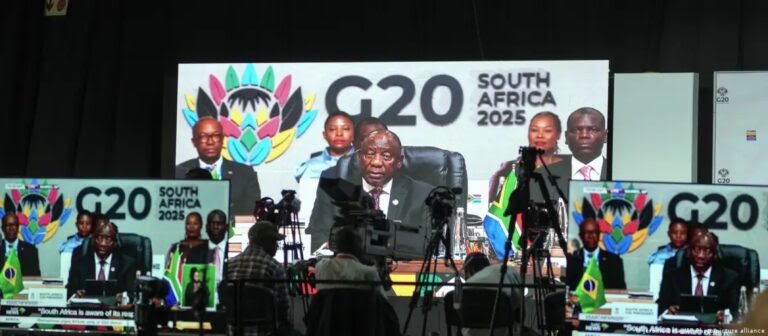
South Africa’s diplomatic ties with Washington deteriorated sharply in 2025, particularly after Trump repeated debunked claims about white farmers, offered fast track asylum to a group of them. Despite US hostility, its boycott of the G20 summit hosted in Johannesburg, South Africa successfully delivered the first G20 meeting on African soil.
The summit produced a declaration affirming multilateralism, committed to strengthening Africa’s voice in global decision making.
That declaration resonated across the continent and beyond.
Days later, at the African Union European Union summit in Luanda, African leaders reinforced the message that the continent would engage partners on its own terms.
European support for infrastructure projects such as the Lobito Corridor signaled growing recognition that Africa can no longer be treated as a passive recipient of policy decisions.
At the same time, Africa continues to widen its global partnerships.
While Europe remains important, countries across the continent are deepening ties with China, Russia, Turkey and the United Arab Emirates. China’s continued investment in African rail and infrastructure projects highlights the competitive global interest in the continent.
Still, challenges persist. Ongoing conflicts in Sudan and eastern Congo, rising military rule in parts of West and Central Africa, heavy debt burdens continue to slow development.
Analysts argue that stronger institutions, peace, regional integration are essential for Africa’s long term progress.

Initiatives like the African Continental Free Trade Area offer hope by promoting intra African trade and regional value chains.
As Africa strengthens cooperation within the Global South and asserts its interests internationally, one message is becoming clear: despite shifting global power dynamics and pressure from Washington, Africa is increasingly shaping its own path on the world stage.