By Micah Jonah, March 13, 2026
The escalating war involving the United States, Israel and Iran is placing severe pressure on the economies of Gulf states as key energy routes and infrastructure face disruption.
Countries within the Gulf Cooperation Council are grappling with the fallout of the conflict as the strategic Strait of Hormuz remains effectively closed, cutting off a major artery for global oil shipments. The waterway normally carries about 20 percent of the world’s seaborne oil trade.
Export volumes have plunged to less than 10 percent of prewar levels, forcing several oil producing countries to scale back production. Iraq has been among the hardest hit, with limited storage capacity forcing a sharp drop in oil output.
Several Gulf states have declared force majeure on energy contracts to avoid legal penalties as shipments stall. Analysts say the disruption has triggered significant bottlenecks across regional supply chains and could have wider consequences for global energy markets.
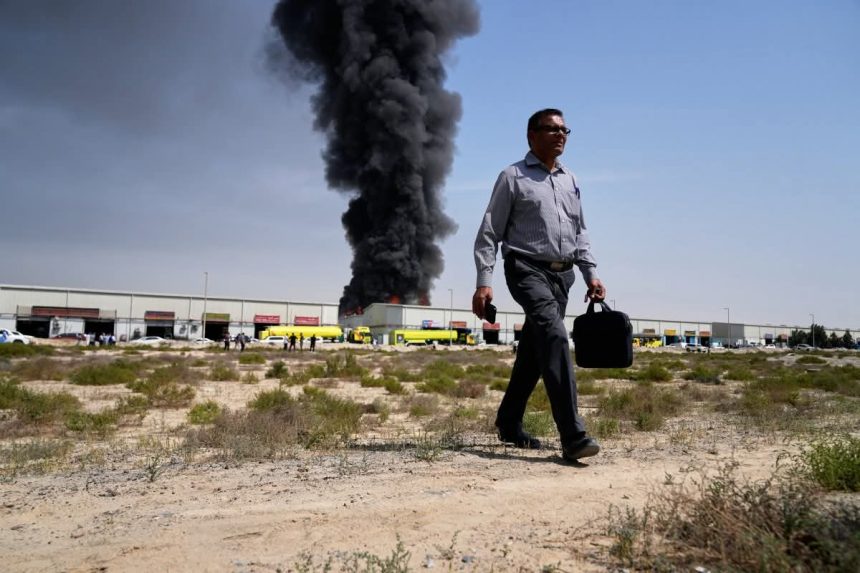
Energy infrastructure across the region has also come under attack. According to regional officials, Iranian strikes have targeted energy facilities, military installations and civilian infrastructure in several Gulf countries, raising concerns about the vulnerability of critical systems.
Airspace closures and security concerns have also disrupted aviation and tourism across the region. Major transit hubs in Dubai, Abu Dhabi and Doha have recorded tens of thousands of flight cancellations as airlines reroute aircraft away from conflict zones.
Defending against missile and drone attacks has imposed enormous financial costs on Gulf states. While Iran is estimated to have spent hundreds of millions of dollars on its attacks using relatively inexpensive drones, Gulf countries have deployed advanced missile defence systems costing several million dollars per interceptor.
Beyond energy and defence, the conflict is also affecting global agriculture markets. Fertilizer exports from the Gulf region, particularly urea shipments that normally pass through the Strait of Hormuz, have slowed dramatically, raising fears of higher food prices in many developing countries.
Economists warn that if the conflict continues, the disruption to energy supply chains, fertilizer production and global shipping could trigger wider economic shocks across international markets.
Analysts also say the crisis may prompt Gulf states to reassess long standing security arrangements as they confront the economic consequences of a war unfolding in their immediate neighbourhood.