Micah Jonah, March 9, 2026
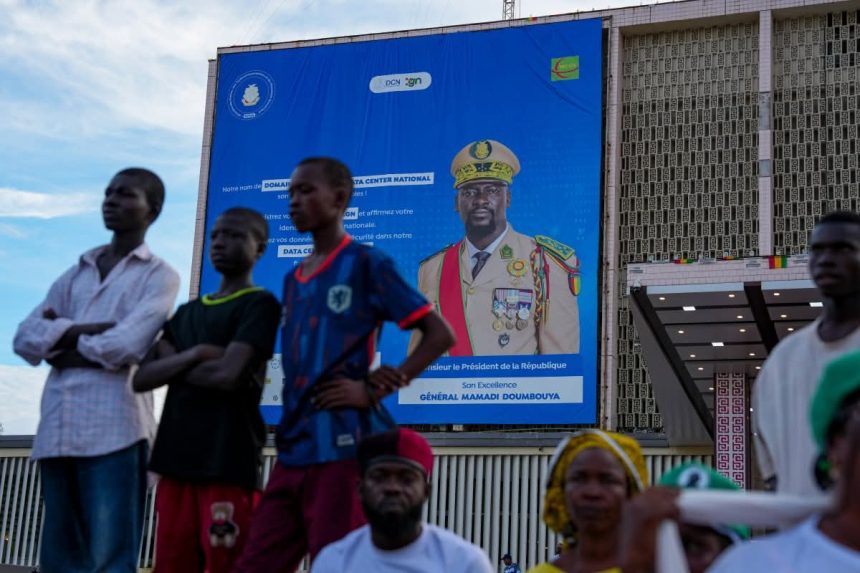
Authorities in Guinea have dissolved 40 political parties, including the country’s main opposition groups, in a move critics say signals a shift towards one-party rule under President Mamady Doumbouya.
The decree, issued by the Ministry of Territorial Administration and Decentralization on Friday, cited the parties’ failure to comply with legal, administrative requirements.
The order strips the affected parties of their legal status, freezes their assets, bans the use of their names, logos and symbols. Authorities also appointed a government curator to oversee the transfer of the parties’ assets.
Among the most prominent organizations affected are the Union of Democratic Forces of Guinea, the Rally of the Guinean People and the Union of Republican Forces.
These parties had already been suspended in August 2025, weeks before a constitutional referendum that cleared the way for Doumbouya to contest the country’s December presidential election.
Opposition figures have strongly criticised the decision. Exiled opposition leader Cellou Dalein Diallo accused the government of dismantling democratic institutions in order to consolidate power.
In a video posted on social media, Diallo urged citizens to resist what he described as attempts to create a “party-state”.
Civil society leaders also condemned the move. Ibrahima Diallo, a leader of the National Front for the Defence of the Constitution, warned that the dissolution of the parties had effectively formalized authoritarian rule in the country.
Doumbouya came to power in 2021 following a military coup that removed former president Alpha Condé.
Since then, critics say the government has tightened control over political activity by shutting down media outlets, banning protests and arresting opposition figures.
Analysts say the developments reflect a wider trend across parts of Africa, where a wave of military coups since 2020 has brought soldiers to power across the Sahel region in what observers describe as a growing “coup belt”.
The developments have raised concerns about the future of democratic governance in several countries across the region.