Micah Jonah, March 9, 2026
Global oil prices have surged past $100 per barrel as the ongoing war involving the United States, Israel and Iran continues to threaten global energy supplies.
The international oil benchmark, Brent crude, rose more than 20 percent on Sunday, briefly reaching about $114 per barrel before moderating to around $107.50 early Monday.
The spike marks the first time oil prices have exceeded $100 per barrel since the 2022 Russian invasion of Ukraine disrupted global energy markets.
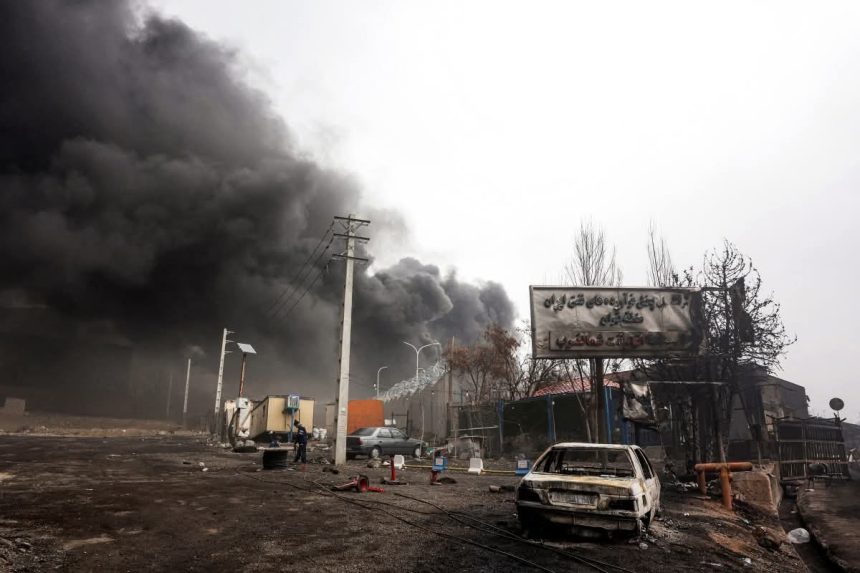
The increase follows weeks of escalating conflict after the United States and Israel launched joint military strikes on Iran on February 28.
Iran has responded by effectively halting shipping through the Strait of Hormuz, a key maritime route responsible for transporting nearly one-fifth of the world’s oil supply.
Major oil-producing countries in the region including Iraq, United Arab Emirates and Kuwait have also reduced production due to disruptions in exports and a growing backlog of shipments.
Despite the sharp rise in prices, US President Donald Trump downplayed the impact on consumers.
In a post on Truth Social, Trump said the increase in oil prices was a “small price to pay” for eliminating what he described as Iran’s nuclear threat.
Energy analysts warn that prolonged disruption in the Gulf could push oil prices even higher, potentially affecting global inflation and economic growth.
According to the International Monetary Fund, every sustained 10 percent rise in oil prices could increase global inflation by about 0.4 percent while reducing economic growth by 0.15 percent.
Iran’s Islamic Revolutionary Guard Corps has also threatened to target additional energy facilities across the Gulf if attacks on the country continue, warning that oil prices could rise as high as $200 per barrel.
The conflict has already triggered sharp declines in Asian stock markets, with Japan’s Nikkei 225 falling more than 7 percent and South Korea’s KOSPI dropping over 8 percent in early Monday trading.
Analysts say the longer the conflict continues, the greater the risk of a global economic slowdown driven by rising energy costs and disrupted supply chains.