By Micah Jonah
January 23, 2026
The European Parliament has voted to refer the European Union free trade agreement with four South American countries to the bloc’s highest court, throwing fresh uncertainty over a deal that took twenty five years to negotiate.
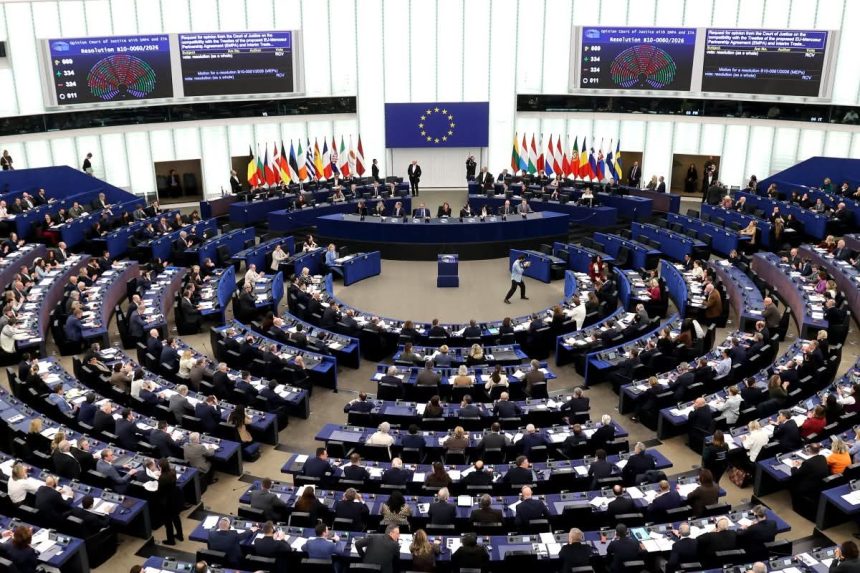
Lawmakers meeting in Strasbourg voted narrowly in favour of asking the Court of Justice of the European Union to rule on whether the agreement is compatible with EU policy and legal obligations. The vote passed with 334 lawmakers in support and 324 against.
The trade pact, signed only days earlier, is the largest trade agreement ever concluded by the European Union, covers Argentina, Brazil, Paraguay and Uruguay under the Mercosur bloc. The deal is designed to remove tariffs on more than ninety percent of trade between both sides.
Under the agreement, European exporters of cars, wine and cheese are expected to benefit, while South American producers will gain easier access to European markets for beef, poultry, sugar, rice, honey and soya beans.
Supporters of the pact, including Germany and Spain, argue that the agreement is necessary to reduce losses caused by United States tariffs and to limit dependence on China by securing access to key raw materials from South America. They describe the deal as a major geopolitical win for Europe.
Opponents led by France and Poland, along with powerful farming groups, warn that the deal could flood European markets with cheaper agricultural products and threaten the survival of local farmers who have staged repeated protests across several countries.
The European Commission expressed regret over the parliament decision, saying concerns raised by lawmakers had already been addressed in earlier negotiations and legal reviews.
The EU top court is now expected to examine whether the deal limits the union ability to set its own environmental and consumer protection standards. A ruling could take up to two years and may force changes to the agreement before it can fully take effect.
Although the European Union could choose to apply the deal temporarily while awaiting the court verdict, political resistance is expected to remain strong, especially after thousands of farmers protested outside the European Parliament ahead of the vote.
For now, the future of the long awaited trade pact remains uncertain as legal and political battles continue within the European Union.